
Introduction
Do we have free will?
I have been circling the problem of free will for years, and I still think it is one of the most unsettling questions we can ask. On the face of it, the idea seems simple enough. Free will is the capacity to choose between possible actions. Every day I decide what to say, what to do, what to resist, what to postpone. It feels obvious that these choices are mine. But that feeling may be a poor guide. Philosophers have long argued that what we call choice may be the output of prior causes unfolding according to rules we neither chose nor control. Neuroscience has only sharpened the problem. Some experiments suggest that the brain is already setting our actions in motion before conscious awareness catches up and declares, a little too proudly, that it has decided.
That is where the trouble begins. If free will is an illusion, then a great deal of ordinary human life starts to look strangely theatrical. We still deliberate, regret, praise, blame, punish, forgive. But on what basis? If every decision is the product of causes running beneath awareness and beyond control, then the old picture of the self as captain of the ship begins to wobble. This is not just a problem for philosophers who enjoy tormenting undergraduates. It reaches into ethics, criminal law, responsibility, and the way we understand what a person is.
Roadmap
In this essay, I continue my discussion of consciousness by taking up free will from several directions in sequence. I begin with the long philosophical argument, from ancient thought through the scientific revolution, to show how determinism came to dominate so much modern thinking about human action. Then I turn to neuroscience, especially the experiments associated with Benjamin Libet, because they force the issue in a more concrete way. They ask whether conscious intention initiates action or merely witnesses it after the machinery has already begun to move.
From there, I consider whether quantum mechanics changes the picture in any serious way, or whether appeals to quantum consciousness mostly relocate the mystery without solving it. Finally, I look at the workspace model of consciousness and ask whether it leaves room for a meaningful form of self determination. Not magic freedom. Not freedom from causation. Something more modest, but perhaps more defensible. A mind that can represent alternatives, reflect on reasons, and shape its own behavior over time may still deserve the name.
Historical and Philosophical Background
Early Philosophical Debates on Free Will
The free will debate did not begin in a neuroscience lab. It began when people first noticed something odd about themselves. We act, we choose, we hesitate, we regret. Yet we also seem to be pushed around by forces we did not create. So which is it? Are we genuine choosers, or only the stage on which causes play out?
The ancient philosophers saw the problem clearly. Aristotle treated choice as central to virtue, because the sort of person you become depends in part on what you repeatedly do. Augustine had a harder knot to untie. If God already knows what you will do, in what sense is your choice still free? Spinoza cut sharply against common sense and argued that people feel free mainly because they know what they want but not what caused the wanting. Kant went the other way. He held that moral responsibility requires a real power of rational self direction.
That is already the basic map of the debate. One side says human agency is real enough to ground responsibility. The other says the feeling of agency may be real, but the freedom we attach to it is suspect. We are still arguing inside that old framework.
Impact of the Scientific Revolution on Free Will
The scientific revolution made the problem harder, not because it disproved free will, but because it raised the standards for what counts as an explanation. Once Newtonian physics made the universe look law governed from top to bottom, the old hope that human choice might somehow float above causation began to look less plausible.
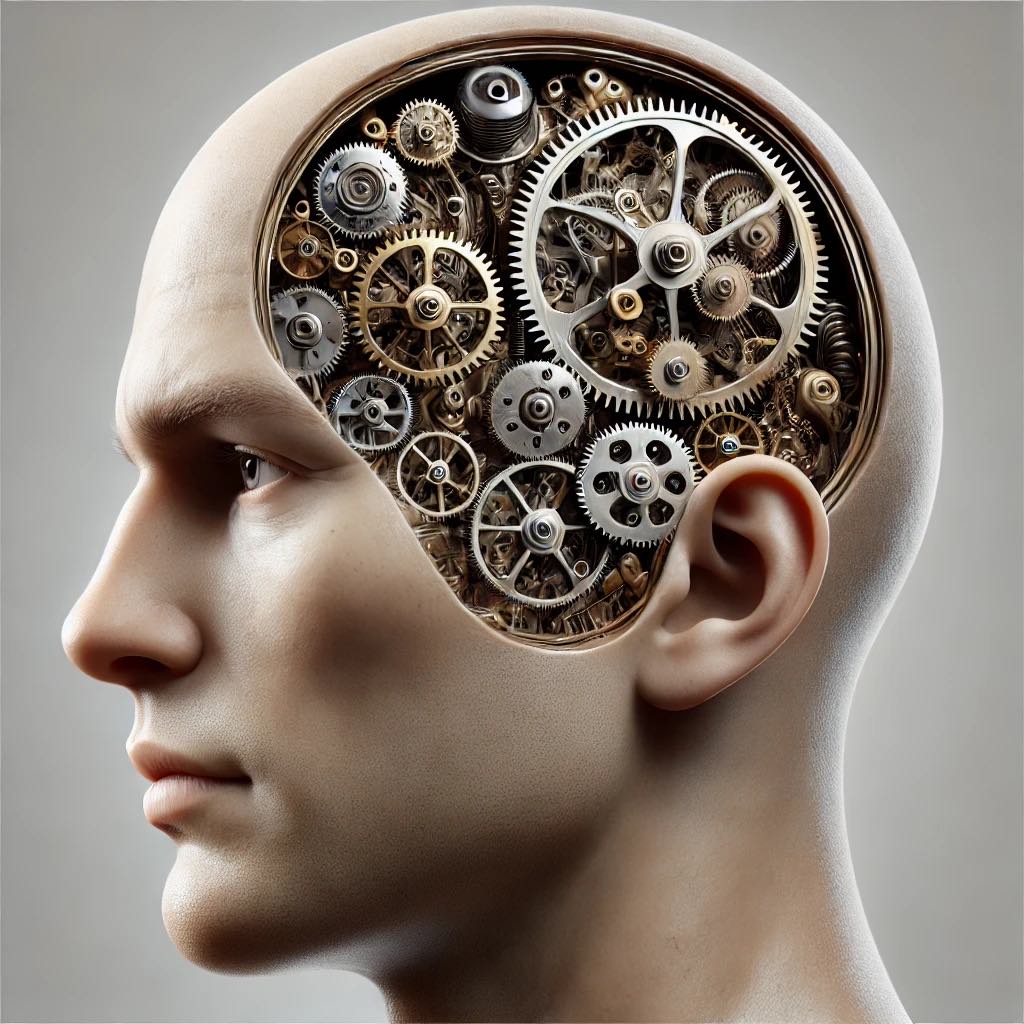
That shift had enormous consequences. If the world is a system of causes and effects, and if the brain is part of that world, then thought and action must also belong to that system. The mind no longer looked like a ghostly pilot steering the body from outside nature. It looked more like part of the machinery.
This is where many people still get trapped. They assume that if our actions have causes, then they cannot be free. But that picture is too simple. A caused action is not the same thing as a coerced action. And an uncaused action would not be a triumph of agency. It would be a spasm.
Contemporary Views of Free Will
That is why the modern debate so often turns on definitions. Daniel Dennett argues that people demand the wrong kind of freedom. If free will means freedom from causation itself, then no, we do not have it. But that would be a useless sort of freedom anyway. The freedom worth wanting is the capacity to deliberate, imagine outcomes, respond to reasons, restrain impulses, and revise behavior over time. That kind of control is perfectly compatible with a physical brain.
Sam Harris is not persuaded. He argues that our decisions arise from prior causes that we neither chose nor control. Thoughts appear. Intentions appear. The feeling that we author them comes later, as part of the show. On that view, free will is not a deep power of the self. It is a powerful impression, and perhaps a necessary one, but still an illusion.
So the dispute is not merely about whether the universe is deterministic. It is about what kind of agency human beings actually need. Dennett says the critics of free will keep asking for magic and then complain when science does not provide it. Harris says compatibilists keep the old language while quietly lowering the bar. That is the real collision point, and it shapes almost everything that follows.
Ethical and Social Dimensions of Free Will
Moral Responsibility and Legal Accountability

The debate over free will directly influences our views on moral responsibility. If every decision is predetermined, assigning accountability for human action becomes problematic. Many legal systems assume that individuals exercise conscious decision and free choice in determining their courses of action. Critics argue that a mechanistic view leaves little room for voluntary action. Yet, defenders of autonomy claim that our capacity for conscious deliberation validates moral responsibility. This tension forms the main argument in discussions about whether the existence of free will can justify holding someone responsible for their deeds.
Societal Views on Human Actions
Society often assumes that human beings are able to make conscious decisions. That is, any given action results from deliberate conscious choice rather than mere chance or external influence. Social attitudes toward free choice shape our perceptions of human behavior and our legal and ethical systems. For instance, many maintain that only a conscious decision can justify assigning moral responsibility. This perspective has profound implications for how we judge voluntary action and the rights of individuals to act of their own free will.
Robert Sapolsky’s Perspective

A compelling view, as articulated by scholars like Robert Sapolsky in Determined: A Science of Life Without Free Will, contends that every aspect of human behavior is the inevitable result of mechanistic processes. According to Sapolsky, our decisions—even those that appear reflective—are simply the outcome of a long chain of cause-and-effect events, governed by genetic, neural, and environmental factors.
According to this perspective, what we consider a conscious decision is not the spark of an autonomous self but the final step in a complex series of biological and environmental interactions. Sapolsky argues that the brain’s sophisticated integrative mechanisms do not inject true unpredictability or self-determination; instead, they process inputs in a highly organized, deterministic manner. This view challenges us to reconsider the problem of free will by suggesting that even our most deliberate actions may be determined by factors beyond our control.
Integrating Ethical Concerns with Scientific and Philosophical Insights
Ethical debates about free will do not exist in isolation. Integrating empirical evidence from medical research and brain sciences with philosophical inquiry offers different ways to address the problem of free will. In doing so, we can bridge abstract theories with the subjective experience of making conscious decisions. This interdisciplinary approach examines human behavior from both ethical and scientific perspectives. Ultimately, such synthesis contributes to our understanding of human free will and helps shape fair and balanced public policies.
Neuroscientific Perspectives Questioning Free Will
The Biological Basis of Behavior
Neuroscience shows that human behavior emerges from complex brain activity and neural circuitry. Researchers have mapped regions such as the prefrontal cortex, motor cortex, and supplementary motor area to understand decision-making. These regions work together to process sensory input, memory, and emotion. In many experiments, scientists have observed that the brain begins preparing for a movement long before a person reports a conscious decision.
Advanced tools like functional MRI and EEG allow us to monitor the electrical activity in the human brain as it organizes these processes. This body of work reveals that the mechanisms underlying decision-making are deeply embedded in neural circuits that follow precise, measurable patterns.
Empirical Evidence from Experiments
A key piece of evidence in this discussion comes from Libet’s experiments. In these studies, participants were asked to perform a simple movement, such as flexing their right hand, while their brain activity was recorded. The results showed a buildup of neural signals known as the readiness potential well before participants reported being aware of their intention to move. This finding suggests that the brain initiates a conscious decision only after unconscious processes have already set the stage for voluntary action. Other studies have replicated these findings, reinforcing the observation that neural activity often precedes conscious awareness. Such data challenge our intuitive sense of immediate and complete control over our actions.
Interpreting the Neuroscientific Evidence
Evidence Against Free Will?
The evidence from these experiments has raised important questions about the existence of free will. If the brain’s decision-making process begins before we are aware of it, the idea that we exercise complete conscious control over our actions becomes harder to sustain. Many researchers argue that this early neural activity implies that our choices are largely determined by preconscious processes. In this light, the neuroscientific evidence invites us to reexamine traditional ideas about voluntary action and the role of subconscious processes in generating what we perceive as conscious decisions.
Libet’s Experiments are of Limited Scope
Critics argue that if neural activity precedes conscious decision-making, then our choices are predetermined. However, Libet’s work focused on basic motor actions under controlled conditions. Such tasks do not reflect the complexity of real-life decision-making, where multiple factors are weighed and integrated. The limited scope of these experiments means they cannot conclusively negate the role of reflective, high-level processes.
The Conscious Veto Mechanism
An important point raised by Libet himself is the existence of a conscious veto. Although the brain may initiate actions unconsciously, there remains the capacity to cancel or modify these actions before they are executed. This conscious veto suggests that higher-level reflective processes intervene in our decision-making. Such intervention indicates that free will is not solely determined by early neural events. Instead, the ability to override initial impulses points to the existence of reflective control.
Conclusion on Libet’s Evidence
Libet’s findings offer valuable insights into the timing of neural processes. However, they do not capture the entirety of human deliberation. The existence of a conscious veto and the complexity of our reflective thinking demonstrate that free will cannot be dismissed on the basis of these experiments alone.
Quantum Non-Determinism and Free Will
Introducing Quantum Non-Determinism
Quantum mechanics adds an additional wrinkle to the free-will debate. At the subatomic level, quantum mechanics introduces elements of randomness that complicate the traditional view of a fully predictable physical universe. Modern physics shows that not every event is strictly predetermined by causal determinism. This inherent randomness challenges the assumption of a perfectly deterministic universe and adds a new layer to the free will debate. The possibility that quantum events might affect brain processes invites us to rethink the nature of free will. Such ideas open up various ways to explore whether voluntary action can emerge from a background of natural laws.
Quantum Consciousness Theory

Some theorists propose that quantum mechanics might play a role in shaping conscious control by influencing brain processes at the microscopic level. A prominent example is the theory of orchestrated objective reduction, often referred to as Orch OR, developed by Roger Penrose and Stuart Hameroff. This theory suggests that quantum effects in the brain’s microtubules contribute to the emergence of consciousness by allowing quantum computations to occur within these cellular structures. According to orchestrated reductionism, these quantum events—specifically, a type of quantum state collapse known as objective reduction—may be “orchestrated” to influence conscious decisions and potentially shape voluntary action.
The Orch OR theory challenges us to reconcile modern physics with the concept of free will, prompting the question of whether inherent quantum randomness can truly yield controlled, conscious decisions rather than mere chance. Despite its intriguing nature, this proposal remains highly controversial and is not yet supported by sufficient empirical evidence. Further rigorous testing and validation are needed before orchestrated reductionism can be integrated into our broader understanding of human behavior and conscious control.
Framing the Central Question in Light of Quantum Non-Determinism
Revisiting our central inquiry, we must note that randomness is not synonymous with free will. Quantum non-determinism introduces possibilities, but free will demands more—it requires reflective self-determination. Even if some biological processes are influenced by quantum randomness, free will must emerge from a system that integrates these effects into coherent, value-driven choices. This nuance is essential for our understanding of human freedom.
Free Will as an Emergent Property of Biological Processes
The Mechanistic Nature of Biology
Biological processes follow structured, rule-governed mechanisms. Every function in the brain, from the firing of neurons to large-scale neural coordination, operates according to well-defined biological principles. Whether these processes include non-deterministic elements at the microscopic level or not, they remain constrained by physical and chemical laws.
Some argue that if consciousness is a biological phenomenon, then free will is impossible—since any decision would be dictated by fixed neural mechanisms. This argument assumes that free will requires an escape from causation, as if genuine agency could only exist outside of physical laws. If this were true, then free will, as commonly understood, could not exist in a biological system.
Reflective Self-Determination as Free Will
Philosophers such as Daniel Dennett and Harry Frankfurt argue that genuine free will does not require a break from mechanistic processes. Instead, free will can be understood as reflective self-determination—a process in which an individual evaluates competing influences, deliberates over alternatives, and makes decisions in alignment with personal values and long-term goals.
This deliberative process is what we experience as free will. We do not feel as though our choices arise from randomness or rigid causation. Instead, decisions appear to emerge from a structured process of weighing options, considering consequences, and acting with purpose. Even though this process is built upon rule-governed biological activity, it results in behavior that is flexible, adaptive, and intentional.
Emergence: Reconciling Determinism with Free Will
 To reject free will based on biological determinism ignores the reality of emergent properties. A system composed of deterministic components can give rise to higher-level phenomena that exhibit novel properties. Consciousness itself likely emerges from complex interactions between neural subsystems, rather than existing as a single localized function.
Similarly, free will does not require a fundamental break from causality—it emerges from the brain’s ability to reflect, evaluate, and plan. The human brain integrates memory, perception, emotions, and reasoning into a dynamic system capable of adaptive decision-making. This integrative process enables choices that are shaped by both external conditions and internal deliberation, rather than being dictated by simple cause-and-effect relationships.
Rather than opposing determinism, free will depends on the structured complexity of biological systems. Conscious reflection allows for flexible behavior, long-term planning, and the ability to override immediate impulses. In this view, free will is not an illusion but an emergent feature of cognitive complexity.
The Global Workspace as a Basis for Free Will
Reflective Consciousness and the Global Workspace
So, what neural processes enable reflective self-determination?
The Global Workspace Theory (GWT) provides a compelling explanation. Developed by Bernard Baars and extended by Stanislas Dehaene, this model suggests that consciousness functions as an integrative workspace, where information from various neural regions—such as perception, memory, and reasoning—competes for attention. The winning inputs enter conscious awareness, allowing for higher-order decision-making.
This process enables individuals to evaluate different courses of action before committing to a decision. Free will, under this model, is not an independent force but a structured process where conscious reflection influences behavior.
The Global Workspace as an Active Decision-Maker
The global workspace is not a passive observer. It collects, evaluates, and refines competing neural inputs, allowing for deliberate action instead of automatic response. This system allows individuals to:
- Compare multiple options before making a decision.
- Suppress or override impulsive behaviors when they conflict with long-term goals.
- Reflect on past experiences to inform future actions.
This model explains why free will does not require an escape from causation. Instead, it emerges from the way the brain organizes and prioritizes competing inputs to shape intentional behavior.
Decision-Making and the Role of Reflective Thought
Critics argue that conscious decisions are merely post-hoc rationalizations of unconscious processes. However, neuroimaging studies suggest that deliberate decision-making is an active process, not a passive one.
Research shows that the dorsolateral prefrontal cortex (DLPFC) plays a central role in planning, self-monitoring, and goal-directed behavior. The anterior cingulate cortex (ACC) is involved in error detection and behavioral adjustment.
These findings support the idea that reflective thought directly shapes decision-making rather than simply narrating past actions. The DLPFC enables people to weigh alternatives, anticipate consequences, and override impulsive reactions. The ACC detects discrepancies between expected and actual outcomes, helping adjust future behavior. If conscious reasoning were merely an after-the-fact explanation, these brain regions would not be specialized for planning, evaluation, and behavioral control.
The Emergence of a Unified Self and Its Role in Free Will
A coherent sense of self is essential for reflective decision-making. The global workspace integrates past experiences, current perceptions, and future goals into a stable personal identity. This continuity allows for:
- Value-driven decision-making based on long-term goals.
- Self-correction and learning through feedback mechanisms.
- A sense of agency by linking conscious deliberation to action.
Paradoxically, the brain’s structured processes actually provide the foundation for free will. Neural circuits responsible for reflection and deliberation shape behavior by guiding actions toward long-term goals instead of automatic responses. Thus, free will emerges from the brain’s ability to integrate, evaluate, and choose, not from escaping causation.
Future Directions
Contributions from Neuroscience and Physics
Emerging neuroimaging techniques and genetic research promise to deepen our understanding of decision-making. Tools like high-resolution fMRI and advanced EEG can track neural integration with unprecedented detail. Genetic studies may reveal how hereditary factors interact with environmental influences to shape our reflective capacities. These advances could bridge the gap between mechanistic biology and emergent reflective self-determination, offering new insights into the basis of free will.
Modern physics, particularly quantum mechanics, challenges strict determinism. Although quantum effects introduce genuine indeterminacy, their impact on brain function remains under investigation. Future breakthroughs might clarify how quantum phenomena influence neural activity and whether they contribute meaningfully to emergent reflective processes. Such research may help reconcile deterministic and non-deterministic elements within the context of free will.
Interdisciplinary Research Prospects
The complexity of the free will debate calls for interdisciplinary collaboration. Integrating insights from neuroscience, philosophy, and physics can lead to a more comprehensive understanding of free will. Collaborative research efforts—combining empirical data, theoretical analysis, and philosophical inquiry—are essential. I encourage scholars from diverse fields to work together to sort out the complex relationship between deterministic processes and reflective self-determination.
Conclusion
Our investigation suggests that free will may not be a myth at all. Even though each neuron follows specific rules, their combined interactions can create a space for reflective self-determination. This emergent capacity is what we experience as free will. Rather than requiring us to break free from nature’s laws, our brains transform mechanistic processes into complex, value-driven decisions.
This perspective challenges us to rethink the foundations of personal responsibility and social ethics. It shifts our focus from an ideal of uncaused action to the real-world power of our reflective minds. Our ability to deliberate, learn from mistakes, and plan for the future is what empowers us, even if every neural event is governed by cause and effect.
Embracing this view invites further exploration into how we can nurture and enhance our reflective capacities. By understanding free will as an emergent property, we open new avenues for both scientific research and ethical inquiry. This process deepens our understanding of human autonomy and gives us new insights into how we shape our lives and society. This exploration encourages us to appreciate the complex interplay between the laws of nature and the remarkable ability of our minds to forge meaning and purpose.
Your Thoughts?
How do you reconcile the apparent determinism of biology with the experience of personal autonomy? Is free will an illusion? Do you believe that reflective consciousness can give rise to free will? Do you have a different theory? Share your thoughts.
Materials for Further Study
Books
Philosophy & Theoretical Perspectives
- Robert Kane – “The Oxford Handbook of Free Will” (2002, Oxford University Press)
A comprehensive philosophical overview of the free will debate, covering both compatibilist and libertarian perspectives. - Daniel Dennett – “Freedom Evolves” (2003, Viking Press)
A compatibilist view arguing that free will is compatible with a deterministic world and emerges through evolutionary and cognitive processes. - Peter van Inwagen – “An Essay on Free Will” (1983, Oxford University Press)
A detailed exploration of the incompatibilist stance, asserting that determinism and free will cannot coexist. - Galen Strawson – “Freedom and Belief” (1986, Oxford University Press)
Examines whether genuine free will is possible and critically discusses the notion of moral responsibility.
Neuroscience & Psychology
- Robert Sapolsky – “Determined: A Science of Life Without Free Will” (2023, Penguin Press)
Argues from a biological standpoint that all human actions are determined by genetic and environmental influences. - Benjamin Libet – “Mind Time: The Temporal Factor in Consciousness” (2004, Harvard University Press)
Discusses Libet’s famous experiments on the timing of conscious decisions and their implications for free will. - Michael Gazzaniga – “Who’s in Charge? Free Will and the Science of the Brain” (2011, HarperCollins)
Examines neuroscience’s role in shaping our understanding of free will and moral responsibility. - Sam Harris – “Free Will” (2012, Free Press)
A concise argument against the existence of free will, emphasizing the neuroscientific perspective. - Alfred Mele – “Free: Why Science Hasn’t Disproved Free Will” (2014, Oxford University Press)
Challenges determinist interpretations of neuroscience and argues that free will remains a viable concept.
Physics & Quantum Mechanics
- Roger Penrose – “Shadows of the Mind: A Search for the Missing Science of Consciousness” (1994, Oxford University Press)
Explores the role of quantum mechanics in consciousness and suggests that deterministic processes may not fully explain cognition. - Jim Baggott – “Quantum Reality: The Quest for the Real Meaning of Quantum Mechanics” (2020, Oxford University Press)
Provides an accessible explanation of quantum mechanics, including its implications for determinism and free will. - George Musser – “Spooky Action at a Distance” (2015, Scientific American / Farrar, Straus and Giroux)
Examines the non-locality of quantum mechanics and whether it challenges classical determinism.
Academic Articles & Papers
- Libet, B. (1985). Unconscious cerebral initiative and the role of conscious will in voluntary action. Behavioral and Brain Sciences, 8(4), 529-566.
The original paper detailing the famous readiness potential experiment. - Lau, H., & Passingham, R. E. (2007). Unconscious activation of the decision to act. NeuroImage, 37(1), 205-213.
Further experiments on unconscious neural processes preceding conscious decisions. - Baumeister, R. F. (2008). Free will in scientific psychology. Perspectives on Psychological Science, 3(1), 14-19.
A review of psychological evidence related to free will and decision-making. - Frankfurt, H. G. (1969). Alternate possibilities and moral responsibility. Journal of Philosophy, 66(23), 829-839.
Challenges the idea that free will requires the ability to do otherwise. - Bargh, J. A., & Chartrand, T. L. (1999). The unbearable automaticity of being. American Psychologist, 54(7), 462-479.
Examines the extent to which unconscious processes influence behavior. - Tegmark, M. (2014). Consciousness as a state of matter. arXiv preprint arXiv:1401.1219.
Explores consciousness from a physics perspective, touching on determinism.
Documentaries & Videos
Neuroscience & Consciousness
- “The Brain with David Eagleman” (PBS, 2015)
- Explores how the brain constructs reality and decision-making processes.
- “Robert Sapolsky: The Illusion of Free Will” (The Origins Podcast 2023)
- A scientific investigation into whether free will is an illusion based on neuroscience.
- “Sam Harris vs. Daniel Dennett. Free Will Debate” (Youtube 2023)
- A thought-provoking debate between two opposing perspectives.
Quantum Mechanics & Determinism
- “The Fabric of the Cosmos” (PBS, 2011, Hosted by Brian Greene)
- Explores time, determinism, and quantum mechanics’ role in shaping reality.
- “Through the Wormhole – Is Free Will an Illusion?” (2012)
- Hosted by Morgan Freeman, discussing neuroscience, physics, and philosophical perspectives on free will.
TED Talks & Lectures
- “Free Will? A Documentary” – Directed by Mike Walsh
- Some of the best minds available on every side of the issue—libertarians, determinists, and compatibilists—offer the best arguments from each side.
- Robert Sapolsky – “The biology of our best and worst selves” (TED Talk)
- To understand why we do what we do, neuroscientist Robert Sapolsky examines actions on timescales from seconds to millions of years before they occurred.
- Dan Dennett – “The Illusion of Consciousness” (TED Talk)
- Explores how consciousness arises and whether it supports free will.
- Anil Seth – “Your Brain Hallucinates Your Conscious Reality” (TED Talk)
- Discusses how perception shapes our understanding of free will and agency.
- David Chalmers – How Do You Explain Consciousness? (TED Talk)
- Explores consciousness and its relation to free will.
Key Online Resources
- Stanford Encyclopedia of Philosophy
- Entries on “Free Will,” “Determinism,” “Compatibilism,” and “Neuroscience of Free Will.”
- The Internet Encyclopedia of Philosophy
- In-depth articles on historical and modern perspectives on free will.
- The Open Mind Project
- A collection of contemporary papers on free will, consciousness, and decision-making.