
Updated 5-29-26
Assisted Migration: A Bold but Necessary Solution
I used to believe conservation meant protecting species where they already lived. Assisted migration has changed my thinking entirely. Climate change is moving faster than most species can follow. A redwood forest cannot uproot itself and walk north. A Joshua tree cannot leave the Mojave. Coral cannot swim to cooler water fast enough. For these species and thousands more, the climate they evolved in is disappearing. Their habitat is becoming hostile. And there is nowhere nearby to go.
Assisted migration is the response. It means deliberately moving species to new locations where they have a better chance of surviving the climate ahead. The practice is controversial. It carries real risks. And it forces hard choices. Nevertheless, for a growing number of species, assisted migration is the alternative to extinction.
This post explores the science behind assisted migration, the most significant projects currently underway, the genuine risks and ethical dilemmas, and where the field is heading. I will be direct from the start: I think we should be doing this, and doing more of it. The case for action is strong. The case for waiting is not.
For a growing number of species, assisted migration is the alternative to extinction.
What is Assisted Migration?
Traditional conservation assumes species stay roughly where they are. National parks, wildlife reserves, and habitat restoration programs all rest on that assumption. Protect the habitat, and the species recover. Climate change breaks that model. Many species are now stranded in places that no longer support them. Conditions are shifting faster than they can adapt or naturally disperse.
Assisted migration takes a different approach. Rather than protecting where species are, it helps them get to where they need to be. Scientists, conservationists, and private landowners now relocate species to new habitats. Sometimes the move stays within an existing range. Sometimes it goes far beyond it. Either way, the destination is chosen based on where suitable conditions will exist in the future.
The field uses three broad categories of assisted migration, each representing a different scale of ambition:
- Assisted Population Expansion — moving individuals within a species’ existing range, to restore lost populations or help it reach already-suitable nearby areas.
- Assisted Colonization — relocating a species entirely outside its historical range, because its current habitat is no longer viable or soon will not be.
- Ecosystem Translocation — the most ambitious category: moving not just a single species but an entire ecological community, including plants, animals, fungi, and soil microbes, to recreate a functioning system somewhere new.
These distinctions are important. The risks and the controversy increase at each level. Moving populations within a species’ range is relatively conservative. Moving species across continents is a fundamentally different kind of decision.
Why Assisted Migration is Necessary
The Extinction Crisis Is Real and Accelerating
Species have always gone extinct. Five mass extinctions have reshaped life on Earth. Unlike those events, driven by asteroids and volcanic eruptions, the current extinction crisis has a single primary cause: us. Scientists estimate species are disappearing at 1,000 times the natural background rate. Coral reefs are bleaching. Amphibians are collapsing. Forests are burning faster than they can regenerate.
For some species, climate change is the final pressure on top of existing threats. For others, it is the primary one. In either case, the result is the same. The habitat they need no longer exists where they are. And the habitat they could use is somewhere they cannot reach on their own.
Natural Migration Is Breaking Down
The standard response to climate concerns is that species will simply migrate to track their preferred conditions. They have done so through past climate shifts. That answer, however, was always an oversimplification. Today it is largely wrong.
Animals that once roamed freely now run into highways, cities, and farmland. Continuous habitat that once allowed gradual movement across continents is now fragmented into isolated patches. Even where movement is theoretically possible, the pace of climate change outstrips it. Most species need to move at least 1,000 metres per year to stay within suitable climate zones. Fast-moving birds and some mammals might manage that. Trees, desert plants, and slow-moving animals have no chance.
Joshua trees grow just 1.5 to 3 inches per year. Their seeds spread at three to seven feet annually. Climate models project that 90 percent of current Joshua tree habitat could be unsuitable by 2100. Coast redwoods face similar constraints. Their seeds do not travel far, and many land in landscapes already too hot or too dry for seedlings. These are not edge cases. They represent what is happening across hundreds of species simultaneously.
Some Species Cannot Wait for Assisted Migration
The American pika lives in cool, rocky alpine habitat in the western United States. When temperatures rise above its narrow tolerance, it retreats upslope. Many pika populations have already reached the tops of their mountain ranges. There is nowhere higher to go. In several areas, colonies have already vanished from peaks where they lived for thousands of years. That is not a projection. It has already happened.
The Atlantic puffin faces a different version of the same problem. It depends on cold-water fish, particularly sand eels, to feed its chicks. As ocean temperatures rise, those fish move to deeper, cooler water. On islands off the Maine coast, puffin chicks are dying in their nests. Their parents cannot find enough food. Puffins cannot simply shift their breeding sites northward. They need specific predator-free islands with the right fish at the right time. Climate change is dismantling that combination faster than natural adaptation can follow.
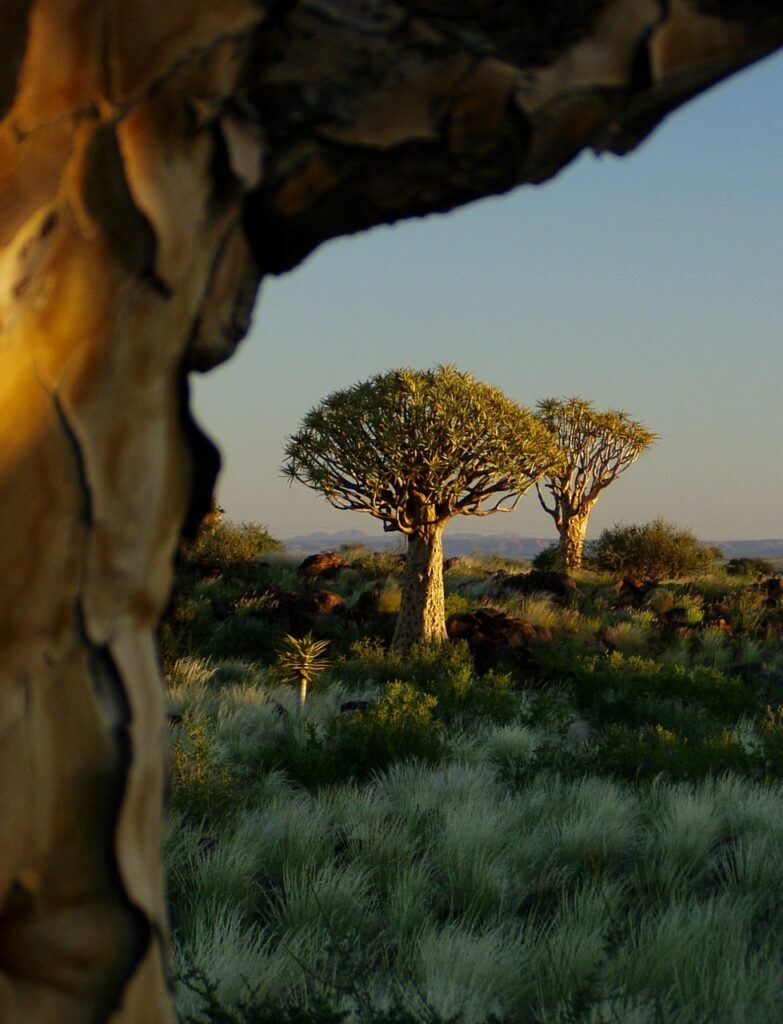
The quiver tree of Namibia and South Africa stores water in its trunk to survive prolonged drought. Even that remarkable adaptation has limits. Old trees are dying where they stand. Young trees are not establishing fast enough to replace them. Climate projections suggest large portions of the quiver tree’s range could become uninhabitable within decades.
Case Studies of Assisted Migration in Action
Some of the most ambitious assisted migration projects are already underway. Some of these efforts are experimental, while others are full-scale conservation projects aimed at preventing ecosystem collapse.
Western Swamp Tortoise: Australia’s Climate Refugee
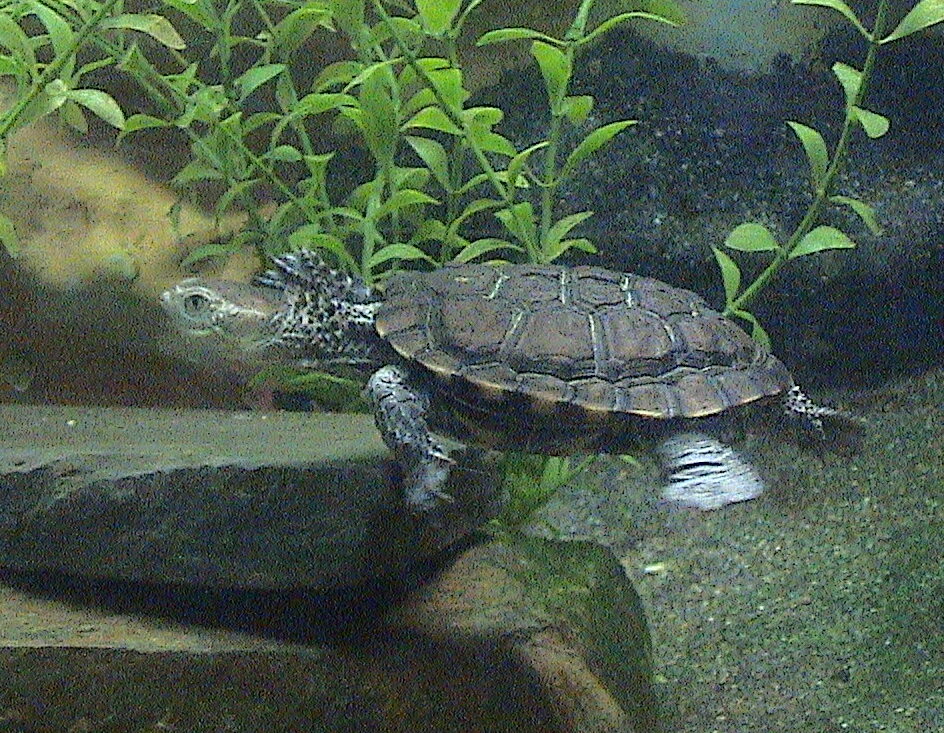
The western swamp tortoise (Pseudemydura umbrina) is the first endangered vertebrate to be deliberately relocated due to climate change. Once thought extinct, this critically endangered species from southwestern Australia was rediscovered in 1954. By the early 2000s, its last remaining habitat held only captive-bred tortoises, with climate change making natural recovery unlikely.
In 2016, 24 captive-raised juveniles were released 300 kilometers south of their native range, where cooler, wetter conditions could give them a better future. Unlike controversial relocation efforts elsewhere, this move followed years of planning and research, with cautiously positive results published in 2020.
A second release followed in 2022, this time in Scott National Park, led by Nicola Mitchell from the University of Western Australia. Mitchell calls the project an ethical responsibility, arguing that doing nothing would doom the species to extinction.
The project highlights the larger debate over how to save species in a warming world. Mark Schwartz of UC Davis doubts mass relocations could solve the global biodiversity crisis but agrees they’re more acceptable than genetically modifying species to survive climate change. Releases continued into 2023, as researchers refine methods and monitor whether assisted migration can truly offer the species a future.
Moving Redwood and Sequoia Forests Northward
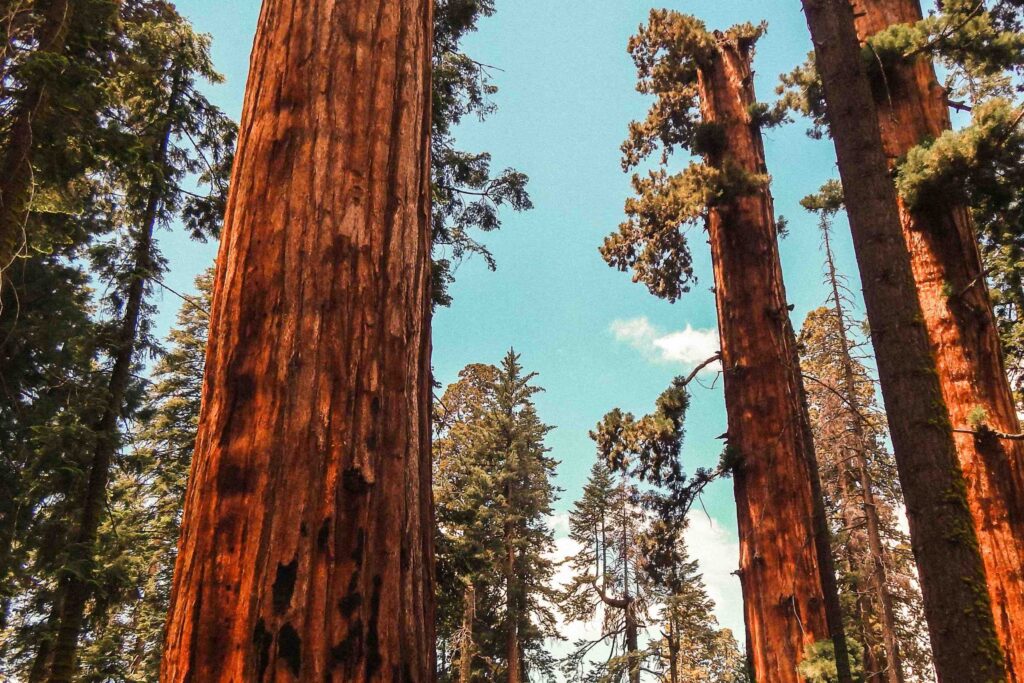
California’s coast redwoods (Sequoia sempervirens) and giant sequoias (Sequoiadendron giganteum) have endured for millennia, surviving Ice Ages, wildfires, and droughts thanks to their thick bark, towering canopies, and natural resistance to pests. But megafires, prolonged drought, and rising temperatures are now outpacing even their legendary resilience.
For decades, redwoods and sequoias have grown outside their native range, thriving in cities like Portland, Seattle, and Vancouver, where cooler, wetter conditions help them flourish. Now, groups like PropagationNation are supporting efforts to plant new groves in Oregon, Washington, and even Canada, creating potential climate refuges for these iconic trees.
These new plantings could offer benefits well beyond preserving redwoods themselves. Many Canadian forests are already in crisis, hammered by drought, bark beetles, and record-breaking wildfires. Vast sections of British Columbia’s interior forests now stand dead or have burned so intensely they may never recover naturally. Redwoods’ natural resistance to pests and fire, combined with their ability to thrive in wetter northern climates, could help restore resilience to these battered landscapes.
The idea isn’t far-fetched. In the late 2000s, British Columbia officially approved the assisted migration of Western Larch 1,000 kilometers north to keep pace with climate shifts. In 2022, a Canadian Forestry Service report proposed that narrow strips of Vancouver Island already provide suitable habitat for coast redwoods, based on successful test plantings and studies of redwood paleogeography.
That ancient history matters. Fossil evidence confirms that redwoods, including Metasequoia, once thrived across much of what’s now Canada, from Alberta to the Arctic Archipelago. Millions of years ago, redwood forests even covered parts of Axel Heiberg Island, showing that much of Canada’s climate once supported these species.
Some ecologists warn that introducing redwoods could disrupt native ecosystems, but others argue that doing nothing risks losing both redwoods and the carbon-storing forests they could help rebuild. With so much forest already gone or dying, planting redwoods and sequoias in carefully chosen northern sites could offer both the trees—and Canada’s struggling forests—a second chance.
Camp Fire Reforestation Plan: Future-Proofing California’s Forests
The 2018 Camp Fire in Paradise, California, was the state’s deadliest wildfire, destroying over 18,000 structures and claiming 85 lives. In response, the USDA Forest Service, under the guidance of Jianwei Zhang, is exploring reforestation strategies that enhance future forest resilience.
Specific details of the reforestation plan are not publicly available. However, climate-adaptive strategies often involve planting a diverse mix of tree species suited to anticipated future conditions. Species such as Ponderosa pine (Pinus ponderosa) and Douglas-fir (Pseudotsuga menziesii) are known for their drought tolerance and adaptability, making them potential candidates for such efforts.
Rather than simply replacing what was lost, this strategy aims to create forests that will thrive in the climate of 2050, not 1950. By selecting trees that are more heat- and drought-resistant, the project seeks to build forests that can better withstand future wildfires and long-term climate shifts. While restoring the landscape will take decades, these efforts lay the foundation for forests that can survive and sustain biodiversity in a rapidly changing world.
Western Red Cedar and the Skagit Watershed
Western red cedar is an iconic Pacific Northwest tree. It is also in serious trouble. Prolonged summer droughts are killing cedars across their range, particularly in lowland areas. In 2025, the Skagit River System Cooperative planted climate-adapted western red cedar seedlings in the Lower Skagit Watershed as a direct assisted migration experiment. The seedlings came from Oregon’s Willamette Valley, a warmer and drier climate. Oregon-sourced stock may be better adapted to future Pacific Northwest conditions than locally sourced seedlings.
The Stossel Creek project in Washington State runs a parallel experiment. It plants Douglas-fir and western red cedar seedlings sourced from Oregon and northern California. A small plot also includes incense cedar from California, a species more drought-tolerant than native cedars but not naturally present in Washington. Early data show Oregon-sourced Douglas-fir surviving at higher rates in some conditions. Results vary considerably by site. The field is moving fast and generating real data.
Joshua Tree Conservation Efforts

The Joshua tree, an icon of the Mojave Desert, may not survive the coming decades. Climate models predict that 90% of its habitat could disappear by 2100, as rising temperatures push conditions beyond what the species can tolerate.
There have been discussions and proposals regarding the assisted migration of Joshua trees (Yucca brevifolia) to counteract the adverse effects of climate change on their natural habitat. The National Park Service has highlighted the importance of assisted migration for the western Joshua tree. They emphasize relocating seeds, fruits, or even mature trees to areas projected to remain suitable under future climate scenarios, acknowledging that climate change may outpace the species’ natural ability to migrate.
Additionally, the Mojave Desert Land Trust has been proactive in conserving Joshua tree seeds. Their seed bank initiative aims to preserve genetic diversity and support future restoration projects. While they do not explicitly advocate for assisted migration, they recognize that having a repository of seeds could be invaluable if relocation becomes necessary to ensure the species’ survival.
However, although assisted migration has been proposed, it is important to note that the California Department of Fish and Wildlife’s “Western Joshua Tree Conservation Plan” does not currently provide specific guidelines for implementing assisted migration, citing insufficient research on the genetic and ecological implications. Future amendments to the plan may address these considerations as more data becomes available.
Los Angeles Urban Reforestation
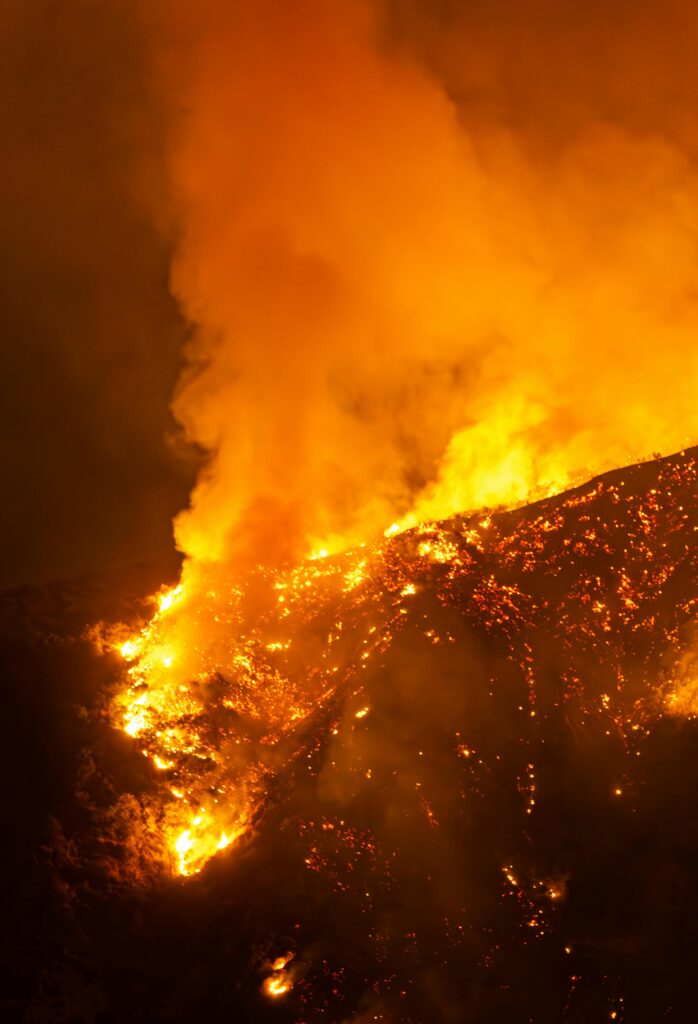
Extreme heat, prolonged drought, and recent wildfires have wiped out vast sections of the city’s tree canopy, leaving neighborhoods exposed to rising temperatures and worsening air quality.
In response, groups like TreePeople are taking a climate-adaptive approach to urban reforestation, selecting drought- and fire-resistant tree species better suited to the conditions Los Angeles will face in the coming decades. This is a form of assisted migration, even if the trees aren’t moving far.
Urban forests provide critical ecosystem services—they cool neighborhoods, improve air quality, reduce energy use, and support biodiversity. Planting trees that can survive and thrive in a more extreme climate is a climate adaptation strategy designed to keep those benefits intact for future generations.
Urban reforestation efforts in Los Angeles also highlight the importance of choosing the right species. Iconic but highly flammable palm trees, long associated with the city, offer little shade and accelerate fire spread. Replacing them with native, drought-tolerant, and fire-resistant species could help protect both people and ecosystems.
Whether in wildlands or urban neighborhoods, assisted migration is increasingly part of the toolkit for adapting to climate change. The forests that once grew here may not survive the future, but with careful species selection and community involvement, new forests can be planted that are ready for the world ahead.
Torreya Guardians: A Citizen-Led Experiment in Species Relocation

Not all assisted migration efforts are government-run. In one of the most controversial examples, a group of citizen scientists known as the Torreya Guardians has taken conservation into their own hands.
Led by Connie Barlow and influenced by the late ecologist Paul S. Martin, the group has been moving the endangered Florida torreya tree to cooler regions, arguing that the species has no chance of survival in its native range.
Critics say this sets a dangerous precedent—relocating a species without official oversight could lead to unintended ecological consequences. But the Torreya Guardians argue that the alternative is extinction. If we wait for bureaucratic approval, it may be too late.
Saving Monarch Butterflies by Moving Their Habitat

In 2024, scientists reported positive results from a dual-species assisted migration project near Mexico City. Researchers planted sacred fir (Abies religiosa), the tree monarch butterflies rely on for winter shelter, on the slopes of an extinct volcano about 75 kilometers from the monarchs’ current sanctuary. The new site sits at higher elevations, where cooler temperatures could offer a more reliable climate refuge as warming disrupts lower forests.
Before the firs could take hold, researchers planted Baccharis conferta, a native shrub that shields young seedlings from frost and drought. This paired planting strategy, moving both habitat and species together, is far more complex than typical single-species assisted migration projects.
A 2024 study coauthored by thirteen scientists found that sacred fir can survive and establish between 3,600 and 3,800 meters, above the species’ current range. With time, these new forests could become a climate-safe overwintering site for monarchs.
Lead researcher Cuauhtémoc Sáenz-Romero noted that monarchs have already been seen forming new colonies in cooler areas of Nevado de Toluca, close to the test plantings. That suggests monarchs are already seeking higher, colder winter sites. If the transplanted firs thrive, the butterflies could naturally adopt the new habitat when the trees mature.
This project stands out for linking habitat creation with species survival, offering a rare example of how assisted migration could help whole ecosystems shift, not just individual species.
Coral Reefs: Transplanting Heat-Resistant Corals
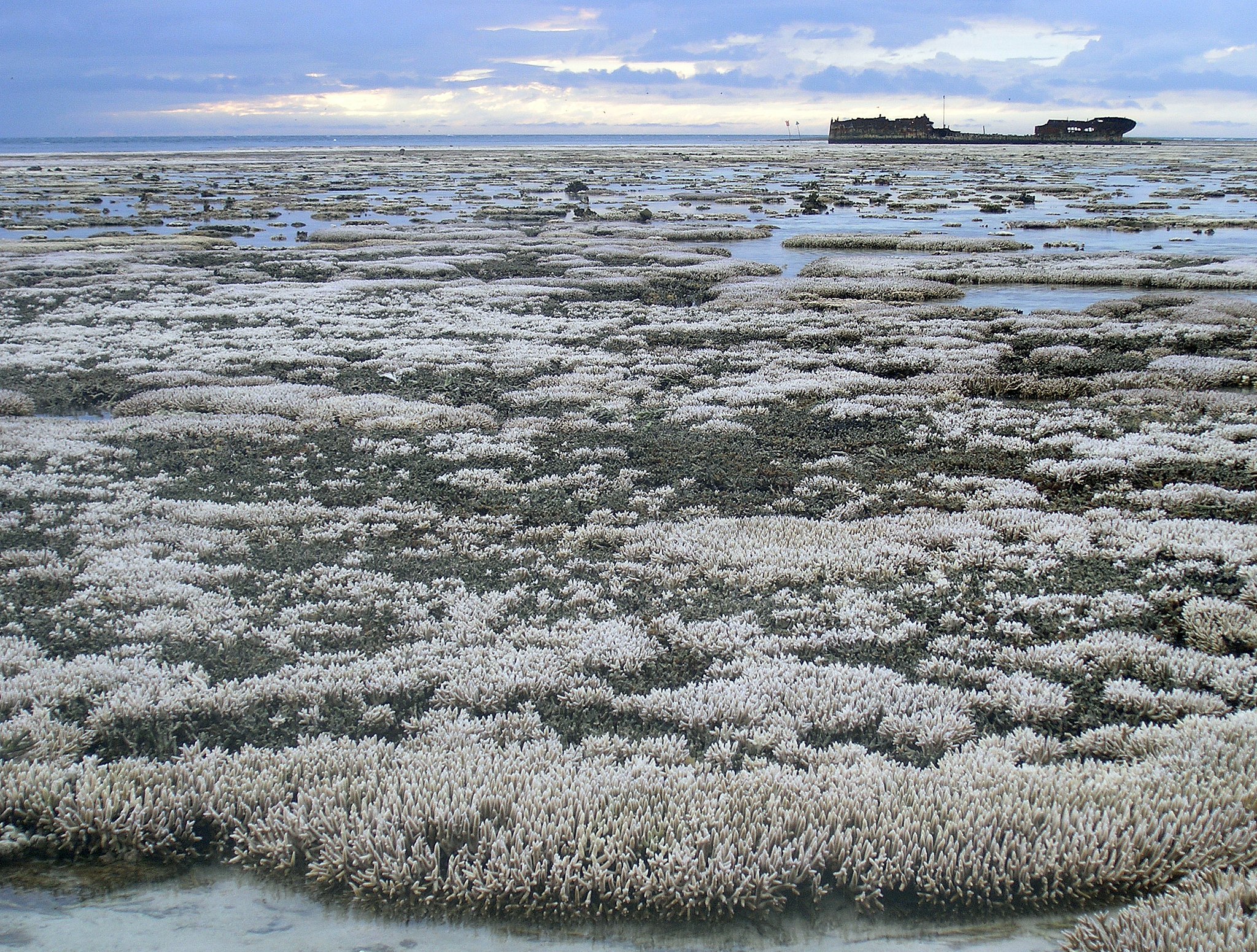
Rising ocean temperatures are wiping out coral reefs worldwide, leaving them with little time to recover. Scientists are now exploring the assisted migration of heat-tolerant corals from the Red Sea, particularly species like Porites lobata, Stylophora pistillata, and Pocillopora verrucosa, to areas where native reefs are declining. The Red Sea’s corals, especially those from the Gulf of Aqaba and Arabian Gulf, have demonstrated exceptional thermal resilience, tolerating temperatures significantly higher than most other coral populations.
Researchers are assessing the feasibility of relocating these corals to cooler waters within the Indo-Pacific region, where coral degradation is severe. These locations could benefit from the introduction of thermally resilient corals to bolster their long-term survival. However, challenges such as ecological compatibility, genetic integration, and long-term monitoring remain critical concerns. If successful, assisted migration could offer a new tool for coral conservation in the face of accelerating climate change.
The Risks of Assisted Migration
Could Relocated Species Become Invasive?
This is the most common concern, and it is a legitimate one. History offers cautionary examples. Cane toads introduced to Australia to control agricultural pests spread rapidly and became a serious ecological problem. European starlings released in North America displaced native birds across the continent.
The critical distinction is that most historical introductions ignored ecosystem consequences entirely. Modern assisted migration projects use ecological modelling to assess invasive potential. They evaluate how a species interacts with existing organisms. They select candidates genuinely unlikely to become dominant in their new range. A species that is critically endangered, slow-reproducing, and habitat-specific is not a plausible candidate for runaway spread. The risks are real. They can also be evaluated, and they look very different for different species.
Will Relocated Species Actually Survive?
There is no guarantee. Climate projections are improving, but nature does not follow scripts. A species might arrive at a new location only to find that key symbiotic partners, soil microbes, or pollinators are missing. The western larch relocation experiment in Canada highlighted this clearly. Seedlings moved northward showed widely variable outcomes depending on local soil conditions, moisture, and unpredictable climate swings. Some populations thrived. Others struggled.
Genetic risks add another layer of complexity. Assisted migration often involves mixing individuals from different populations to increase genetic diversity. That can strengthen resilience. Alternatively, it can dilute locally adapted traits. Managing this requires genetically diverse seed stocks, multiple relocation sites, and long-term monitoring. None of that is cheap or simple.
Who Decides Which Species Assisted Migration Saves?
This is the ethical question that sits under everything else. Conservation resources are finite. Assisted migration is expensive. The decision about which species receive help is inevitably shaped by factors beyond pure ecology: charisma, political visibility, economic value, and research funding.
There is no clean answer to that. Nevertheless, it is worth being direct: doing nothing is also a choice. Letting species disappear because we refused to intervene is a moral decision, not a neutral stance. We are already making choices about which species survive. The question is whether to make those choices deliberately and carefully, or by default.
Could Assisted Migration Substitute for Cutting Emissions?
Some critics worry that assisted migration offers governments a way to appear to act on biodiversity loss without addressing its root cause. If species can be moved, why bother reducing emissions?
This concern is valid as a political risk. Scientifically, however, it presents a false choice. Assisted migration is a response to damage already done. Even if global emissions fell to zero today, climate change would continue reshaping ecosystems for centuries because of what is already in the atmosphere. Assisted migration and emissions reduction address different timescales of the same problem. The danger lies in pretending either one is sufficient on its own.
Policy and Law: The Ground Is Shifting for Assisted Migration
Conservation law was designed for a world where species stayed put. The Endangered Species Act protected species within their historical ranges. A 1984 rule restricted experimental populations to areas within or near their native range. That rule effectively blocked climate-driven relocations even when survival depended on them.
In 2023, the U.S. Fish and Wildlife Service removed the historical range requirement. Consequently, wildlife officials can now legally relocate listed species to entirely new habitats as climate conditions shift. The agency acknowledged that when the ESA was written, climate change was not on the radar. It is now.
Nevertheless, species do not stop at national borders, and that is where the legal framework remains inadequate. When a species shifts into a new country, it often loses legal protection because most laws assume fixed ranges. The Yellowstone to Yukon Conservation Initiative is building wildlife corridors between the U.S. and Canada to allow natural movement. However, it does not authorise active cross-border assisted migration. For that to work at scale, governments will need new bilateral and multilateral agreements. The science is well ahead of the law.
Where Assisted Migration Is Heading
Assisted migration is moving from experimental to operational in several contexts. The debate about whether to do it is largely over. The active discussion now focuses on how to do it well, how to prioritise limited resources, and how to build the institutional infrastructure that large-scale implementation requires.
Climate modelling is improving rapidly. High-resolution projections now incorporate temperature, precipitation, soil conditions, and ecological interactions. Conservationists consequently have much better information about where to relocate species and what conditions to expect. Projects like the monarch butterfly overwintering relocation in Mexico and the Pacific Northwest forest experiments are generating real data on what works and what does not.
Gene banking and assisted evolution are complementary tools. Seed banks preserve genetic diversity for species that cannot be immediately relocated. The Svalbard Global Seed Vault stores thousands of plant varieties that could be essential for future reforestation. Coral researchers are breeding heat-resistant strains for transplantation into bleaching reefs. These genetic interventions remain controversial. They are also extending the toolkit available to conservationists.
The most ambitious future direction for assisted migration is ecosystem translocation: moving not individual species but whole communities of interdependent organisms. The Yellowstone to Yukon initiative points in this direction, connecting corridors through which multiple species can move simultaneously. Some researchers are already considering actively transplanting pollinators, fungi, and soil microbes alongside plants and animals. This is harder, more expensive, and more uncertain than single-species relocation. It is also more ecologically coherent.
Citizen science is part of the picture too. The Torreya Guardians demonstrate that formal institutions do not hold a monopoly on conservation action. Programs enabling landowners, community groups, and individual citizens to participate in assisted migration could dramatically expand what is currently possible with limited public funding.
A New Kind of Conservation: The Case for Assisted Migration
Assisted migration forces a confrontation with something many conservationists have resisted: nature will not return to what it was. Climate change has already reshaped ecosystems, severed ancient migration routes, and pushed thousands of species into survival mode. The relevant question is no longer whether to intervene. It is how to intervene wisely, based on the best available science, with honest acknowledgment of both the risks of action and the certainty of the alternative.
Conservation has always been about protecting species and landscapes against the forces that threaten them. The threat has changed. The species that once moved gradually across continents over thousands of years now need to move faster than evolution allows. If we want them to persist, we will have to help them get there.
That means accepting that some of what we are doing has never been done before. It means making decisions under uncertainty. It means accepting that some assisted migration projects will fail, and learning from those failures rather than treating them as reasons to stop. And it means being honest: the climate crisis we are responding to is one we caused. The least we can do now is try.
Be sure to visit bleedingedgebiology.com next week for another “bleeding edge” topic!
Your Thoughts
Assisted migration challenges the core assumptions of traditional conservation. It asks how much we should intervene in nature, whether relocation is a responsible adaptation or an ecological gamble, and what we owe to species that are struggling with conditions we created.
Should we be moving species to help them escape climate change, or are the risks too high? Are there specific projects covered here that you find compelling or concerning? And where do you stand on the broader question: should conservation focus on preserving historical ecosystems, or on helping life adapt to the world ahead? I would love to hear your thoughts in the comments.
Bleeding Edge Biology Recommends
For readers who want to go deeper on assisted migration, species relocation, and the science behind this post.
Books
Edited by Martin J. Gaywood et al. • Cambridge University Press • 2022
The most comprehensive current treatment of conservation translocations, drawing on specialists from around the world. Covers project planning, biological and social factors, and complex decision-making frameworks. The essential reference for anyone who wants to understand how assisted migration projects are actually designed and evaluated.
Articles
William M. Twardek et al. • Biological Conservation • 2023
A global evidence map of where assisted migration has been implemented. The finding that the practice is most common for plants, particularly trees, and rarely implemented for other taxa, is important context for understanding where the field currently stands.
Zhongqi Chen et al. • Evolutionary Applications • 2022
A thorough exploration of how genomic approaches can improve assisted migration decisions, ensuring that relocated individuals carry the genetic diversity needed to thrive in new conditions. Essential reading on the genetic risk dimension covered in this post.
Assisted Migration Helps Animals Adapt to Climate Change
Joanna Thompson • Sierra • 2023
A clear overview of the 2023 U.S. Fish and Wildlife Service policy change removing the historical range requirement for assisted migration. Good context for the legal and policy section of this post.
Playing the Hand of God: Scientists’ Experiment Aims to Help Trees Survive Climate Change
The Guardian • July 2020
A vivid account of early tree-focused assisted migration experiments and the ethical debates they provoked. The title captures the tension well. A good read for anyone who wants the human story behind the science.
Can We Move Our Forests in Time to Save Them?
Lauren Markham • Mother Jones • December 2021
A deeply reported piece on the Joshua tree, redwood, and sequoia assisted migration debates in California and the Pacific Northwest. Covers PropagationNation, the science of redwood paleogeography, and the people driving these projects.
The Forest Service Is Experimenting with Relocating Tree Species to Save Them from Climate Change
InvestigateWest • August 2025
The most current reporting on Pacific Northwest assisted migration experiments, including the Stossel Creek incense cedar planting and the debate between native population migration and non-native species introduction. Captures the state of the field as of mid-2025.
Talks
The Side of Climate Change We Are Not Debating Enough: How to Adapt
Jessica Hellmann • TED • 2015
One of the clearest arguments for why adaptation strategies, including assisted migration, need to be taken as seriously as emissions mitigation. Hellmann is a conservation biologist who has thought carefully about both the ethics and the practicalities of moving species. A strong entry point for the debate.
Assisted Tree Migration and Its Potential Role in Adapting Forests to Climate Change
Catherine Ste-Marie • YouTube • Forest adaptation presentation
A detailed, technically grounded presentation on forest assisted migration, covering seed transfer zones, genetic considerations, and the Canadian experience with Western Larch. More technical than most public-facing material, but very useful for readers who want to understand the forestry side of the field.
Websites & Resources
Center for Resilient Conservation Science: Assisted Migration
The Nature Conservancy • crcs.tnc.org
The Nature Conservancy’s resource on intentional translocation of species and genetic material, with current project information and methodological guidance. A good starting point for understanding what the largest conservation organisation in the world is doing in assisted migration.
Moving Endangered Species in Order to Save Them
Yale Environment 360 • e360.yale.edu
A clear and balanced examination of the complexities and debates around assisted migration in the United States. Yale E360’s coverage of this topic has been consistently strong and scientifically reliable.
How Assisted Migration Could Help Species Survive Climate Change
SueEllen Campbell • Yale Climate Connections • March 2024
A curated collection of articles, projects, and perspectives on assisted migration. Particularly useful as a reading list for anyone who wants to follow the field across multiple angles, from policy to ecology to specific case studies.
USDA Forest Service: Assisted Migration
U.S. Forest Service • research.fs.usda.gov
The Forest Service’s own resource on assisted migration, covering its role in forest management, the current state of practice, and ongoing experiments. Useful for readers who want to understand what the federal government is actually doing, rather than just debating.