

According to the National Coffee Association’s Fall 2025 survey, two out of three American adults drink coffee every day, averaging about three cups each. With that much consumption, I’m going to assume you know how to brew or order your favorite coffee beverage, so I’ll skip grinding strategies and latte art and stick to the biology of coffee.
I’ll start with the plant and the drug it makes. Then I’ll report on the health data, including a carcinogen born in the roaster. Along the way I’ll hold the research up against my own habit. And since you’re asking, my intake is about two or three double espressos a day.
The plant behind the biology of coffee
Coffee comes from shrubs in the genus Coffea, part of the madder family, Rubiaceae, and related to gardenias. The fruit is a red berry with two flat beans inside. Coffee is not a legume, however, so calling them beans is a misnomer. The number of coffee species stands at 124, but just two support our drinking habit. Americans mostly drink arabica. According to a 2022 report from the U.S. International Trade Commission, beans from this plant represented 87 percent of imports. Robusta makes up the rest. Because it’s a harsher bean with about twice the caffeine, robusta is primarily used for instant coffee and blends.
Arabica is an East African hybrid between robusta, or Coffea canephora, and the species Coffea eugenioides. A 2024 study in Nature Genetics dates the crossing to 350,000 to 610,000 years ago. Arabica has two genomes and can pollinate itself. This is a big advantage for growers because Arabica seed breeds true. Robusta, by comparison, is self-incompatible, so cross-pollination is required, and seed can be variable. On the other hand, selfing and repeated population crashes have left arabica genetically threadbare. I find this troublesome, as the species will have little to draw on when a new fungus or a hotter decade arrives.
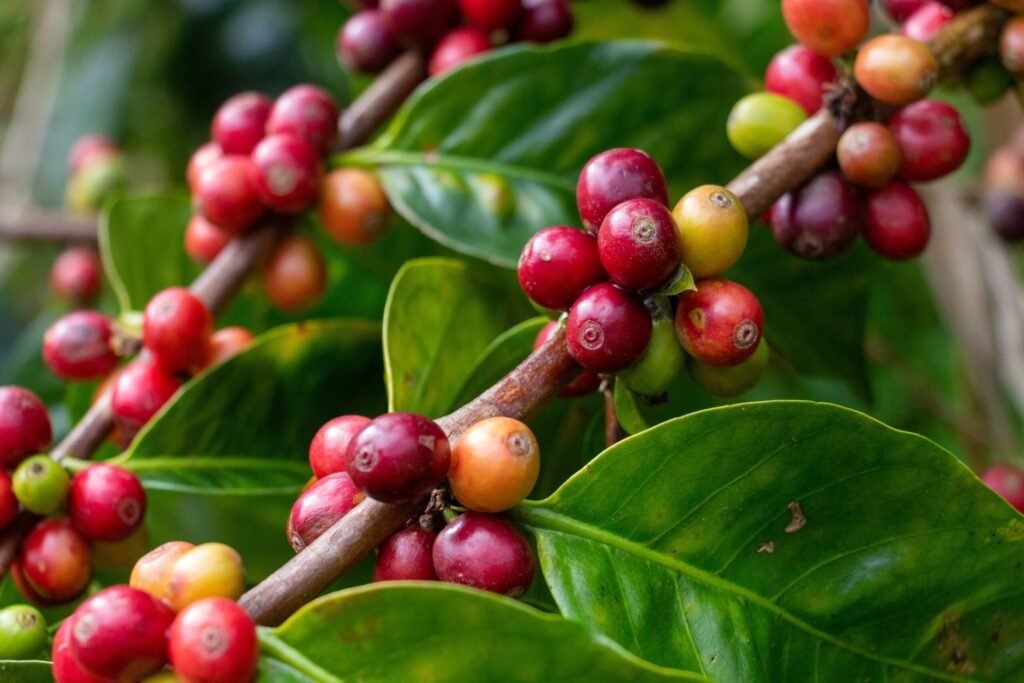
Coffee Berries Silvana-Palacios via Pexels
The science of caffeine
Caffeine sits at the center of the biology of coffee. Plants make it primarily for defense. If caffeine is fed to tobacco hornworm caterpillars at the levels found in coffee beans, they will stop eating, and most of them will die (Science). In insects, it scrambles cyclic AMP signaling by blocking the enzyme that mops it up, phosphodiesterase. However, its effects on insects aren’t all bad. Coffee nectar also has a trace of caffeine, which helps honeybees remember the scent. Coffee, tea, and cacao each hit on caffeine separately.
Caffeine uses a different trick to keep you awake. Chemists call caffeine 1,3,7-trimethylxanthine. It is a purine, containing the same fused double ring found in the DNA base adenine. Adenosine carries that ring too. This molecule helps to drive sleep by building up in the brain while you are awake. Adenosine makes you sleepy by binding to A1 and A2A receptors. Caffeine resembles it closely enough to bind to these receptors without activating them. Caffeine doesn’t clear adenosine like sleep does, but for a while you stop feeling its effects.
Caffeine is metabolized by your liver with the enzyme CYP1A2. Common genetic variants of this protein determine the rate at which caffeine is metabolized, which is why some of us feel its effects longer than others. Its half-life is three to seven hours. The FDA calls 400 mg a day generally safe for adults.
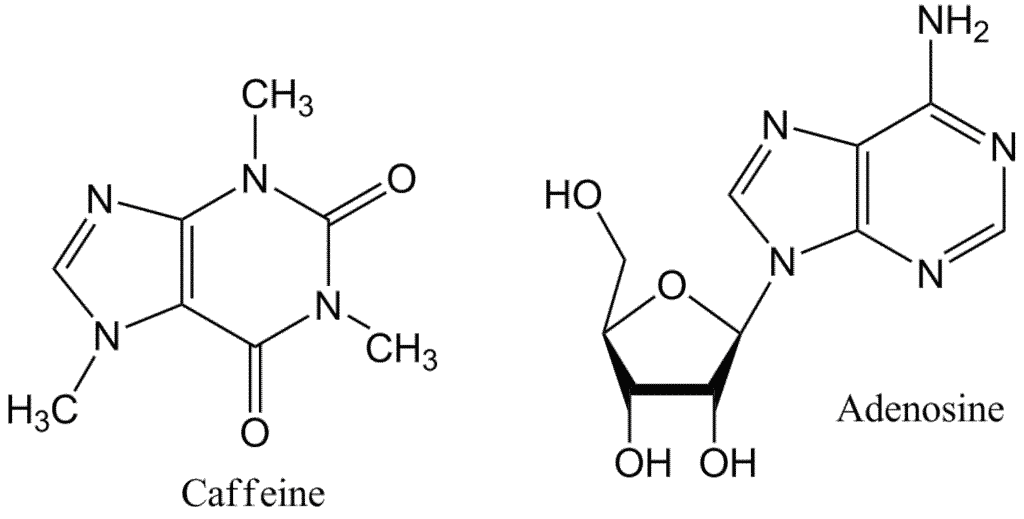
By ClockworkSoul via Wikimedia Commons CC BY-SA 3.0
The biology of coffee and a longer life
Several large studies have tested what the biology of coffee means for longevity. In 2012, Neal Freedman’s team at the National Cancer Institute tracked more than 400,000 older Americans for up to 13 years (NEJM). Men who drank four or five cups a day had a 12 percent lower risk of dying during the study. The risk was 16 percent lower in the women.
A 2018 study of nearly 500,000 Britons found the same pattern, even at eight cups a day (JAMA Internal Medicine). Decaf and instant coffee produced almost the same result, suggesting that caffeine did not produce the effect. A 2022 follow-up found that a teaspoon of sugar per cup didn’t erase the benefit. A pump of caramel syrup is a different story, however.
These observational studies should be taken with a grain of salt. Coffee drinkers differ from abstainers in income and habits, and some people quit because they are already sick. Even so, the signal has held across countries and decades.
I recently wrote a blog post on longevity science and billionaires you can read here.
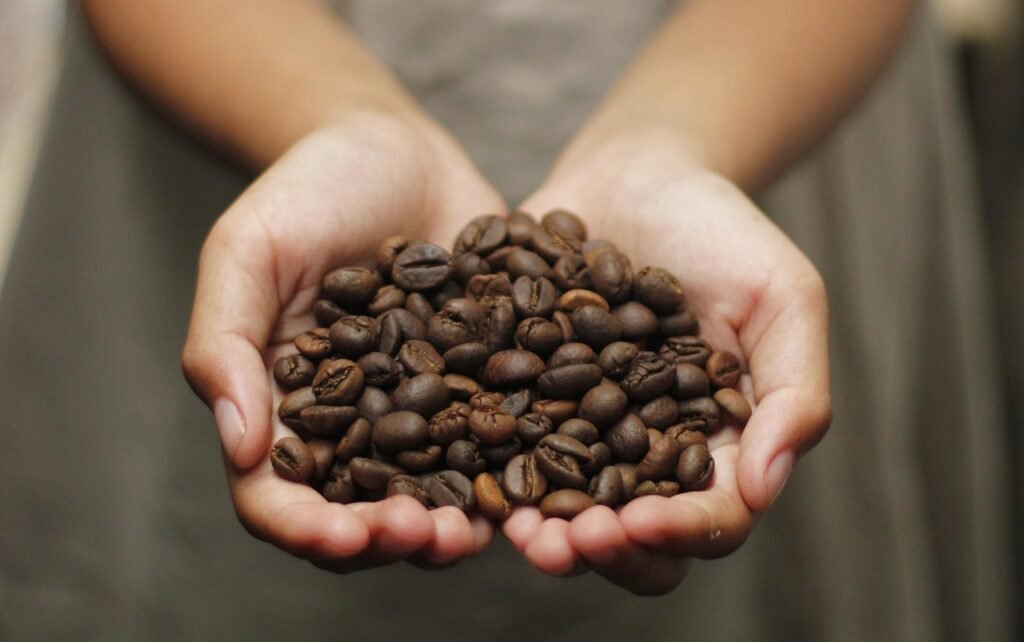
Gedsarts via Pixabay
The biology of coffee and the aging brain
I love coffee’s taste and effects. But dementia of various kinds runs in my family, so I take my coffee drinking seriously.
The best dementia data arrived this year. Yu Zhang and colleagues at Harvard followed 131,821 nurses and health professionals for as long as 43 years. The heaviest drinkers of caffeinated coffee had an 18 percent lower dementia risk than the lightest. The benefit peaked around two to three cups a day and then plateaued. Decaf showed nothing, so for the brain, caffeine itself looks like the active ingredient.
Parkinson’s disease has an older record. A 30-year study of Japanese American men in Honolulu found that non-drinkers carried several times the risk of heavy drinkers.
A 2021 UK Biobank study adds a caution to excessive coffee intake. Kitty Pham and Elina Hyppönen reported that those who drank more than six cups a day had 53 percent higher odds of dementia. Few people in the Harvard cohort drank that much, so the two studies mostly describe different drinkers.
So I try to keep my intake to two or three doubles a day. At about 63 mg per shot, that works out to 250 to 380 mg of caffeine, under the FDA’s 400 mg and well short of six cups.
Diabetes and the liver
A 2014 meta-analysis pooled 28 studies and 1.1 million people. In this case, six cups a day went with a 33 percent lower risk of type 2 diabetes, so go figure. Decaf worked nearly as well, however.
The liver shows the biggest associations of all. In a 2017 analysis, each extra two cups a day went with a 35 percent lower risk of the commonest liver cancer. The authors rated their own evidence “very low” quality. I like that candor.
Pregnancy is the firm exception. High intake is linked to low birth weight and pregnancy loss (BMJ, 2017), and the advice to cut back stands.
The chemistry of coffee
Much of the biology of coffee is chemistry. Chemists have identified more than a thousand volatile compounds in roasted coffee. This counts only the ones light enough to drift into your nose, and the full tally is anyone’s guess. A few hog the attention.
Chlorogenic acids are the main polyphenols in green coffee beans. In lab and animal work, they slow glucose uptake, which may explain part of the diabetes link. Roasting wrecks a good share of them, so light roasts keep more.
Trigonelline is niacin with a methyl group. A 2024 paper in Nature Metabolism showed it feeds the cell’s NAD+ supply. It lengthened life in worms and strengthened old mice. The work came from Nestlé, which sells a great deal of coffee, so I’d like to see other labs repeat it.
Cafestol, an oily diterpene, raises LDL cholesterol. Paper filters trap most of it. French press and boiled coffee let it through, and espresso falls somewhere in between.
Line up the decaf results and a rough division appears. Caffeine seems to carry the brain effects. For mortality, diabetes and the liver, the rest of the brew does most of the work.
Acrylamide, the carcinogen in the roast
Not every part of the biology of coffee is good for you, however. The browning that flavors coffee also makes acrylamide from the amino acid asparagine and sugars. Compared to other foods, it is not the worst offender, though. French fries and potato chips carry more acrylamide than roast coffee. Light roasts hold more than dark, because acrylamide breaks down as roasting goes on.
The molecule is tiny and reactive. It latches onto proteins, and once the liver converts it, onto DNA. It is both a known neurotoxin and a suspected carcinogen. Although shown to cause cancer in rodents, in people, the nerve damage is better documented than the cancer. Workers exposed to large amounts develop numb hands and feet, weakness, and a wobbly gait. Richard LoPachin and Terrence Gavin argue that nerve terminals are the main target. There, acrylamide ties up cysteine residues on proteins that handle neurotransmitter release.
Biologists are familiar with the polymerized form of acrylamide, known as polyacrylamide. Polyacrylamide gels are particularly useful for molecular biology as they can resolve DNA strands that differ by one nucleotide in length. I’m going to show my age here, but I have had more experience with these gels than I care to admit. One college summer I worked in Leroy Hood’s lab on a project to sequence the human T-cell receptor alpha locus. Every day I poured and ran two acrylamide slab gels for my radioactive sequencing reactions. At about 1.1 million base pairs, this was the longest continuous stretch of sequenced DNA at that time.

Acrylamide Wikimedia Commons
Why coffee’s benefits still win
You’d expect a probable carcinogen to drag coffee’s record down. It doesn’t seem to. In 2016, an IARC panel reviewed more than 1,000 studies and downgraded coffee from “possibly carcinogenic” to “not classifiable.” Drinkers even showed lower rates of liver and endometrial cancer.
California law pulled the other way. Under Proposition 65, a 1986 ballot measure, businesses must warn customers about chemicals the state lists as carcinogens. Acrylamide made the list in 1990. In 2018, a Los Angeles judge ruled that every cup needed a warning. In response, the state rewrote its regulation, declaring that coffee poses no “significant risk” of cancer.
Dose explains part of the gap. The rodent studies used far more acrylamide than any coffee drinker takes in. The rest comes down to mixture. A cup delivers acrylamide alongside chlorogenic acids, trigonelline and caffeine, and the cohort studies measure the net effect.
If anything in a coffee shop worries me, it’s the syrups and the pastry case.
The bleeding edge of the biology of coffee
The plant itself is in trouble. Kew’s 2019 assessment found 60 percent of wild coffee species threatened with extinction. Wild arabica is now listed as Endangered. Climate models project that the land suitable for coffee will shrink by about half by 2050.
Coffee has crashed before. In the 1870s and 1880s, a rust fungus gutted Ceylon’s plantations. The island’s planters gave up and grew tea. Breeders fighting rust today mine wild relatives for resistance genes.
Those wild relatives are the ones disappearing. My espresso habit rests on a plant with almost no genetic slack, grown in a warming belt of the planet. I’d feel better if its wild cousins got half the attention we give to what coffee does for our livers.
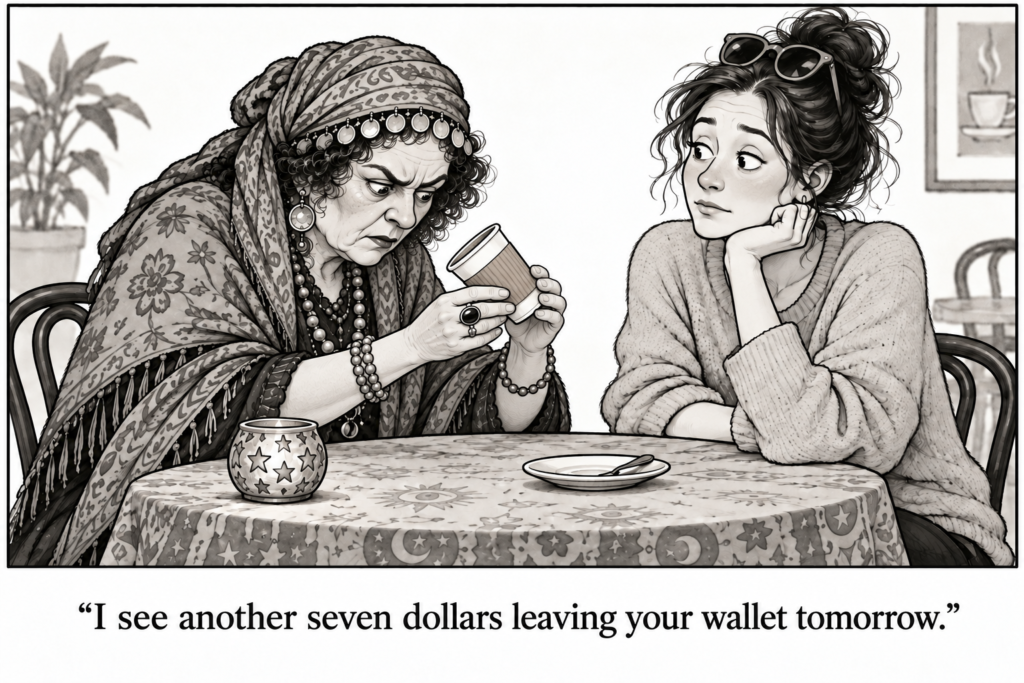
Your thoughts about the biology of coffee
How much coffee do you drink, and has any of the health research changed your habit? I’d like to know. What surprised you most about the biology of coffee? I’m also curious whether anyone has switched to decaf and noticed a difference, for better or worse.
If you poured acrylamide gels in a lab, send me your stories. The same goes for anyone who has farmed coffee or run a roaster. And if you think I’ve misread a study, say so in the comments. Point me to the paper and I’ll take another look.
Be sure to visit Bleeding Edge Biology next week for an article on another bleeding edge topic!
Bleeding Edge Biology recommendations on the biology of coffee
Articles
A high extinction threat for wild coffee could rattle the sector (Kew Science blog, Royal Botanic Gardens, Kew, 2019)
The Kew coffee team explains how it assessed all 124 wild coffee species and why 60 percent ended up on the threatened list. It is the plain-language companion to their 2019 paper.
Coffee consumption and health: umbrella review of meta-analyses of multiple health outcomes (BMJ, 2017)
Robin Poole’s review gathers 201 meta-analyses in one place, and it is free to read. The summary tables make a handy reference for almost any outcome you might wonder about.
Books
The World of Caffeine by Bennett Alan Weinberg and Bonnie K. Bealer (Routledge, 2001)
A thick survey of caffeine’s chemistry, pharmacology, and cultural history. It came out in 2001, so read the health chapters alongside newer studies.
Uncommon Grounds by Mark Pendergrast (Basic Books, 1999, revised 2019)
Pendergrast tells the history of coffee and the trade built around it, plantations, price crashes, and all. It remains a popular history of the drink and a readable one.
Caffeinated by Murray Carpenter (Hudson Street Press, 2014)
Journalist Murray Carpenter follows caffeine through coffee, soda, energy drinks, and synthetic powder. He asks why a drug this common is so loosely regulated.
This Is Your Mind on Plants by Michael Pollan (Penguin Press, 2021)
Pollan writes about three plant drugs, including caffeine. He gives it up for a stretch and describes what withdrawal did to his work.
Videos
How does caffeine keep us awake? (TED-Ed, Hanan Qasim)
A short animated lesson on adenosine and how caffeine blocks it. Send it to anyone who asks why coffee works.
Documentaries
Black Gold (2006), directed by Marc Francis and Nick Francis
Marc and Nick Francis follow Tadesse Meskela, head of an Ethiopian coffee cooperative, as he fights for a fairer price. The biology stops at the farm gate here, and the economics take over.
A Film About Coffee (2014), directed by Brandon Loper
Brandon Loper’s documentary tracks specialty coffee through growing, processing and the café counter. It pairs well with the section above on how coffee is grown.
Websites
Coffee, The Nutrition Source (Harvard T.H. Chan School of Public Health)
A plain-language summary of coffee and health research from the school behind the dementia study. It is a good check against the next breathless headline.
Arabica Coffee Varieties (World Coffee Research)
A catalog of cultivated coffee varieties with their lineage, yield, and disease resistance. Browse it and you’ll see how few genetic lines the whole industry rests on.