
Introduction
Two versions of the longevity science story are running parallel right now. In one, careful researchers run small trials, publish modest results, and discuss the meanings of their findings. In the second, wealthy men dose, infuse, inject, and reprogram themselves on camera and call it a movement.
As someone trained as a biologist and who has spent a lot of time in hospitals lately, I also see this field from two perspectives. Part of me wants the careful proof. Part of me wants the field to hurry up. There are merits to both views.
Here is my take up front. Longevity research has made some promising scientific progress, but it is still early days. Meanwhile, a community of wealthy biohackers is taking medicine into their own hands using self-experimentation techniques based on little evidence. Distinguishing between these two perspectives is critical to understanding the current state of the field.
What the longevity science actually shows
Let’s start with senescent cells. These are “zombie” cells that have stopped dividing but remain alive. They accumulate in aging tissues and leak factors that inflame and damage the surrounding cells. Clear them out, the idea goes, and you remove one cause of aging. The drugs that do this are called senolytics.
The best-known pair is dasatinib, a leukemia drug, plus quercetin, a plant compound. James Kirkland and his colleagues at the Mayo Clinic led this work. By 2025 the first small human trials had reported. In two early studies in older adults at risk for Alzheimer’s, SToMP-AD and STAMINA, twelve weeks of the two drugs proved safe, reached the brain, and linked falling inflammation to slightly better memory scores.
This is where I put on my scientist hat. A link in a few patients is a reason to run a bigger trial. It is not a reason to celebrate. A larger randomized trial is now under way. Until we have those data, we will not know if the effect is real. I find the biology exciting, but any drug promising to improve the symptoms of Alzheimer’s deserves skepticism. As I reported in my last article Alzheimer’s drugs have a 99.6% failure rate.
Moreover, the field has a cautionary tale. UNITY Biotechnology took a senolytic called UBX0101 into a mid-stage trial for knee arthritis. In 2020 it failed outright, no better than a placebo for pain. UNITY dropped the drug. Clearing these cells works well in mice. Doing it in a human knee turned out to be more complicated.
Reprogramming: the biggest bet in longevity science
Cellular reprogramming uses a different strategy. Instead of removing senescent cells, the goal is to make old cells act young again. The idea goes back to Shinya Yamanaka, who won a Nobel Prize for showing that four proteins, Oct3/4, Sox2, Klf4, and c-Myc, can turn an adult cell back into a stem cell. This method now shows up all over biology, including the work I covered on growing human eggs and sperm from ordinary cells. Turn the proteins on partway and then stop, and in theory you could reset a cell’s age without erasing what kind of cell it is. That is the bet behind partial reprogramming.
The billionaires funding reprogramming
The billionaires are anteing up. Altos Labs launched in 2022 with about 3 billion dollars from backers including Jeff Bezos and Yuri Milner. And, they actually signed up Yamanaka himself as an unpaid adviser.
Another startup, Retro Biosciences, funded with 180 million dollars from Sam Altman, have a similar goal. They recently teamed up with OpenAI to redesign the Yamanaka proteins, reporting a big jump in efficiency. Computation is becoming a real tool in this work. I looked at the same mix of computing and biology from the other side, using living neurons as hardware, in my piece on organoid intelligence.
And and a third company, David Sinclair’s Life Biosciences has pushed its own version of this longevity science strategy toward a human trial for age-related vision loss.
It would be wonderful if these programs succeed. However, given the stage cellular reprogramming is currently at, I believe this work warrants considerable skepticism. Altos only hired Joan Mannick as Chief Medical Officer in 2025 (the typical indicator that a company is getting ready to start human trials). Altos has provided no human data.
Furthermore, partial reprogramming has an additional potential hazard that has been mentioned in numerous press releases but has rarely been explored. If you push the cells too aggressively with these proteins, they can lose their identity and develop into teratomas (a type of tumor). Nobody has identified the appropriate dosing regimen and timing to make cells younger without inducing cancer. As someone whose life has been disrupted by cancer, I believe we should proceed with caution.
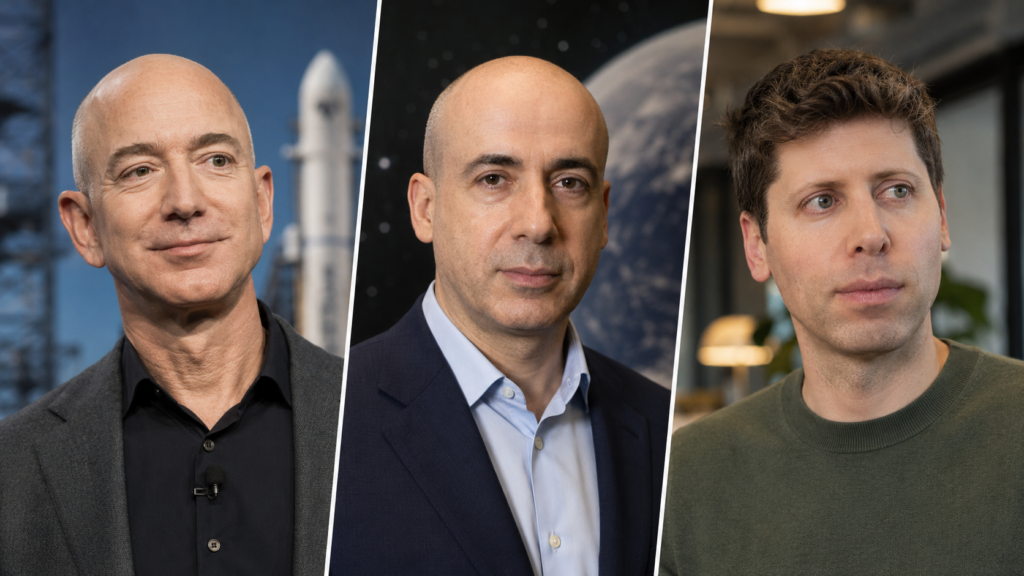
Jeff Bezos, Yuri Milner, and Sam Altman
David Sinclair, longevity scientist and salesman
Sinclair as scientist
No one shapes the public image of longevity science more than David Sinclair. He also demonstrates why you have to separate the lab from the sales pitch. His science is real. In the early 2000s his Harvard lab tied the sirtuin proteins to lifespan and promoted resveratrol to switch them on. That work led to Sirtris and its 720-million-dollar sale to GSK. GSK later shut the program down when the resveratrol drugs did not work out. Keep that in mind when the next big claim arrives.
He currently advocates the Information Theory of Aging. It proposes the primary causes of aging are not genetic but instead come from the gradual scrambling of epigenetic “tags” or “marks” that instruct cells what genes to express. To test this hypothesis, his laboratory developed the ICE mouse model. It was engineered such that repeated DNA repairs could disrupt these epigenetic marks without altering the underlying genetic sequence. The results, published in 2023, indicated that ICE mice exhibited accelerated aging phenotypes and appeared approximately 1.5 times older on a chemical clock. Sinclair’s group then administered the Yamanaka proteins OCT3/4, SOX2, and KLF4, which epigenetically reversed some markers of aging in kidney and muscle cells. These results drew both praise and skepticism from the longevity science community. A 2024 commentary published in the same journal stated flatly that the theory has yet to be properly tested.
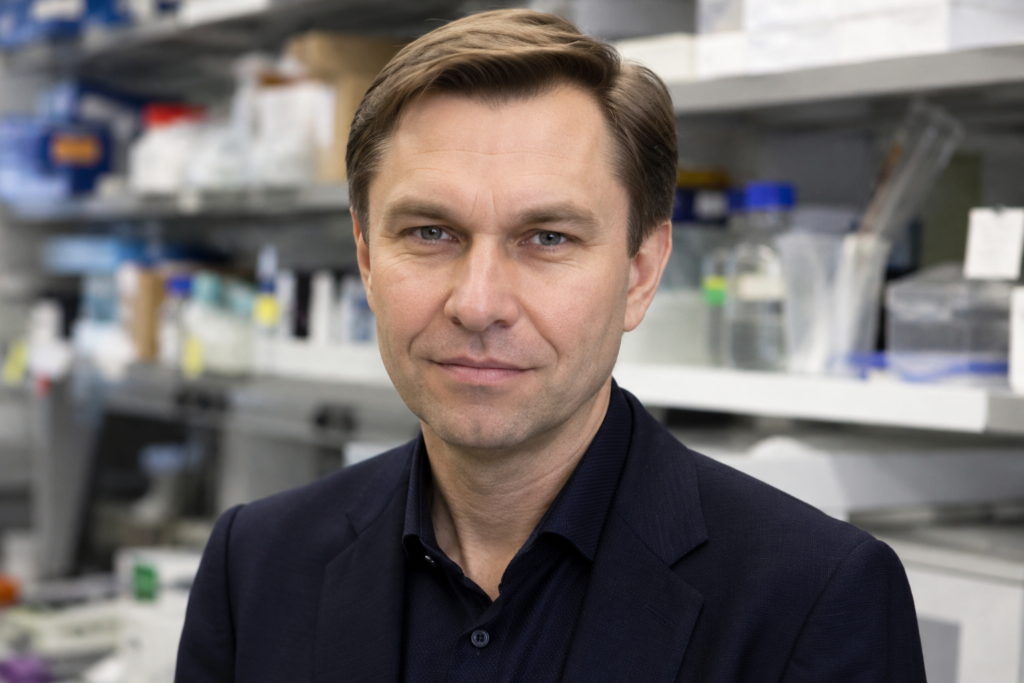
David Sinclair
Sinclair’s first human reprogramming trial
Here is the part that changes things. Sinclair’s company Life Biosciences turned that approach into a gene therapy called ER-100. After it restored optic-nerve signaling in monkeys, the FDA cleared it, and the company dosed its first human patient in June 2026. This is the first human trial of partial reprogramming anywhere. It targets glaucoma and one form of optic-nerve damage, not aging in general. I think that is a smart call. A single eye disease gives regulators a clear goal and keeps the therapy in one tissue, lowering the cancer risk that shadows whole-body reprogramming. Even so, a safety trial with one patient shows only that the shot can be given. It does not show that it works.
Sinclair as salesman
I do give Sinclair credit here. There are times when he wears the salesman hat. However, he puts his body where his mouth is. For years now he has publicly stated, in interviews and in his book Lifespan, that he personally follows a daily regimen that includes:
-
NMN (the precursor of the cellular fuel NAD+)
-
Resveratrol (which he takes with NMN) to activate sirtuins
-
Metformin, the diabetes medication
-
Vitamins D & K2
-
A mostly plant based diet, intermittent fasting and exercise
This is clearly a serious effort, and I commend him for that. However, commitment is not proof. None of these supplements have been shown to increase human lifespan, and Sinclair earns revenue by providing access to this concept via companies such as Tally Health, which provide epigenetic age testing. In 2022, other longevity science researchers, including Matt Kaeberlein, criticized Sinclair for selling an anti-aging dog pill without publishing results. When the scientist and salesperson use the same voice, you must determine whether their claims are published in a peer-reviewed journal or the subject of a marketing campaign. While I do take Dr. Sinclair’s science seriously, for now I will hold off on purchasing his promoted supplements.
The oldest drugs in longevity science: rapamycin and metformin
Two of the compounds best-supported by longevity science have been around for quite some time. Let us start with rapamycin. Rapamycin suppresses mTOR, the the main cellular growth switch. When mTOR is suppressed, the cell moves from growth mode to maintenance mode. It synthesizes less protein and recycles more of its waste products via autophagy. Slower cell division is one outcome. However, researchers believe it is the increased recycling activity (autophagy) that extends lifespan.
Rapamycin’s effect on longevity has been extensively documented. The Interventions Testing Program, a careful US project that runs the same drug through three separate labs in genetically mixed mice, has demonstrated that rapamycin extends lifespan more reliably than nearly every treatment tested by the program.
Longevity science has also identified the diabetes drug metformin as a potential anti aging drug. The interest comes from the fact that it touches more aging-related pathways than any other molecule we know about. Evidence that it extends lifespan in mice is weaker, however. The same program found that metformin exhibited no lifespan benefit in mice on its own. The main positive study found only a small lifespan increase in one genetic background.
Where are the human results?
While enthusiasm for both rapamycin and metformin as longevity drugs is high, the actual results from longevity science is not as robust. Data from human trials have thus far been thinner and weaker than expected. A recent human trial known as PEARL (published in 2025), administered low doses of weekly rapamycin to 114 otherwise healthy adult participants for 48 weeks.
The results from this study showed that rapamycin was safe for humans and resulted in a significant increase in lean body mass in female subjects. It failed in its main goal of producing a drop in belly fat, however. Further, a comprehensive review published in Lancet Healthy Longevity found that no trial of rapamycin demonstrates any slowing of aging or extension of lifespan in healthy people.
Missing trial for Metformin
As of 2026, the major trial assessing metformin’s effects on biological aging (the TAME trial), has yet to begin. The TAME trial involves 3000 older adults, and if successful would demonstrate that drugs can be developed specifically targeting biological aging rather than a single disease. The trial remains unfunded and unlaunched to date, because regulatory bodies currently do not recognize aging as a treatable medical condition. This one issue explains why longevity science drags while influencers sprint.
I am going to push back against my earlier caution. While there is no completed human trial demonstrating the efficacy of either rapamycin or metformin as anti-aging agents, this demonstrates how difficult and expensive it is to conduct a longitudinal human study on aging over decades and how financially strained funding agencies are for conducting basic research.
I believe there exists a reasonable middle ground between labeling these drugs as proven anti-aging therapies versus reckless use. Some physicians provide prescription-based rapamycin off-label to patients who fully comprehend the associated risks.
Blood, plasma, and a surprising twist
Young blood grabs the imagination. For two decades, experiments that stitched a young mouse and an old one together showed that something in young blood refreshes old muscle, liver, and brain. The race to bottle that something has pulled in serious money.
Then a result came in that remains under-publicized. Irina and Michael Conboy at Berkeley demonstrated that to achieve this result young blood is not necessary. When they swapped half of an old mouse’s plasma for plain saline and albumin, adding nothing young, the animals improved across the same tissues. The gain seems to come from diluting the buildup of junk in old plasma, not from adding youthful factors. In 2025 a Buck Institute human study of plasma exchange reported an average drop in biological age of about 1.3 years.
These findings dramatically alter how one should interpret the previous literature.
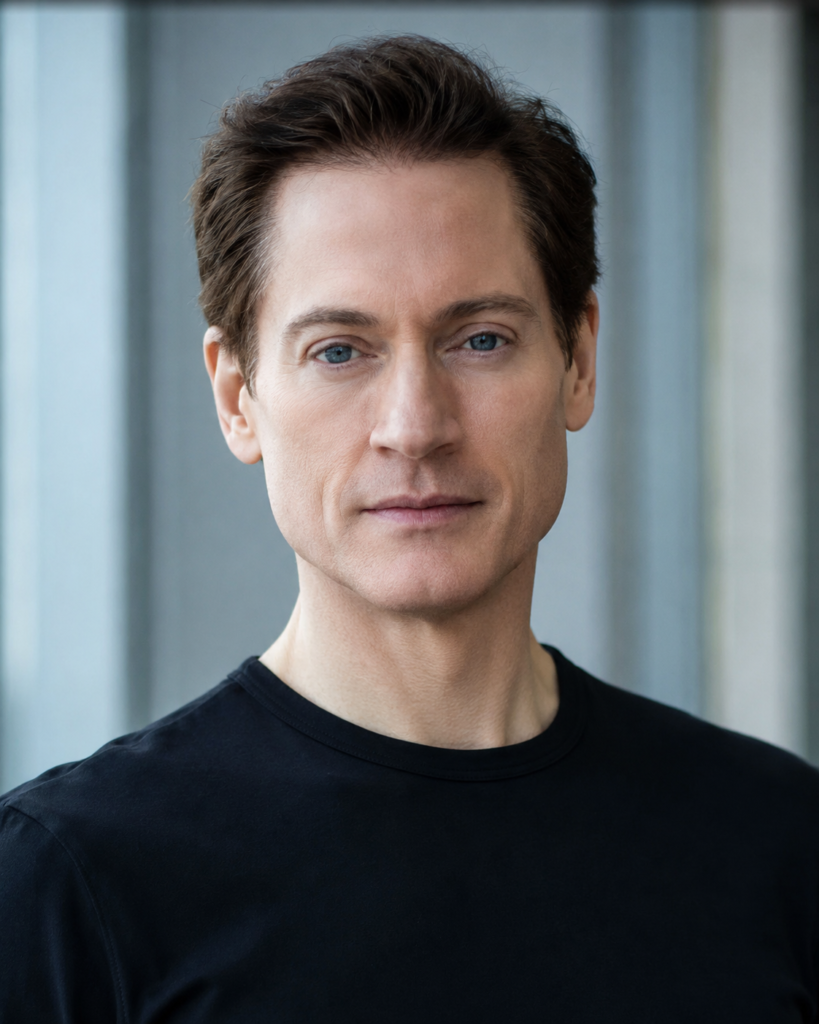
Bryan Johnson
The self-experimenters running ahead of the evidence
Bryan Johnson’s Project Blueprint
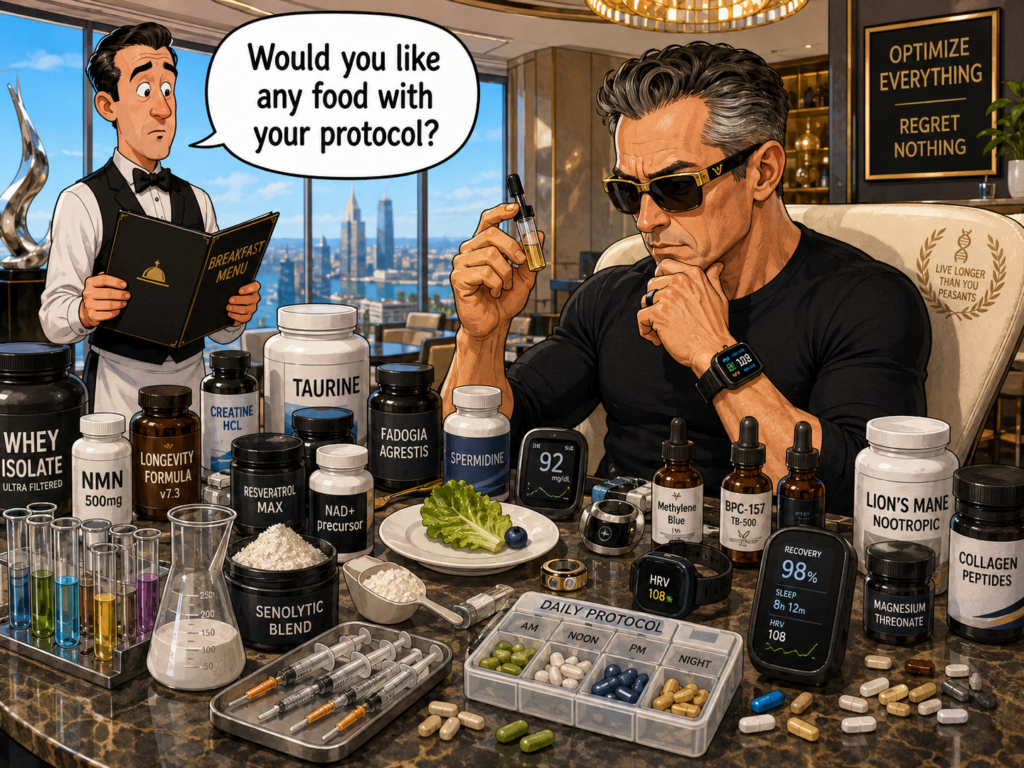
Let’s take another look at the second track. Former payments entrepreneur Bryan Johnson reportedly spends $2 million each year on Project Blueprint. His regimen includes over 100 daily supplements and continuous biomarker monitoring. In 2023, he completed a three-generation plasma swap involving his teenage son and his father. After reporting there were no benefits from this activity, he discontinued it. In 2025, after taking rapamycin for nearly five years, Johnson stopped due to adverse side effects. He also cited a preprint study suggesting the drug aged him on epigenetic clocks.
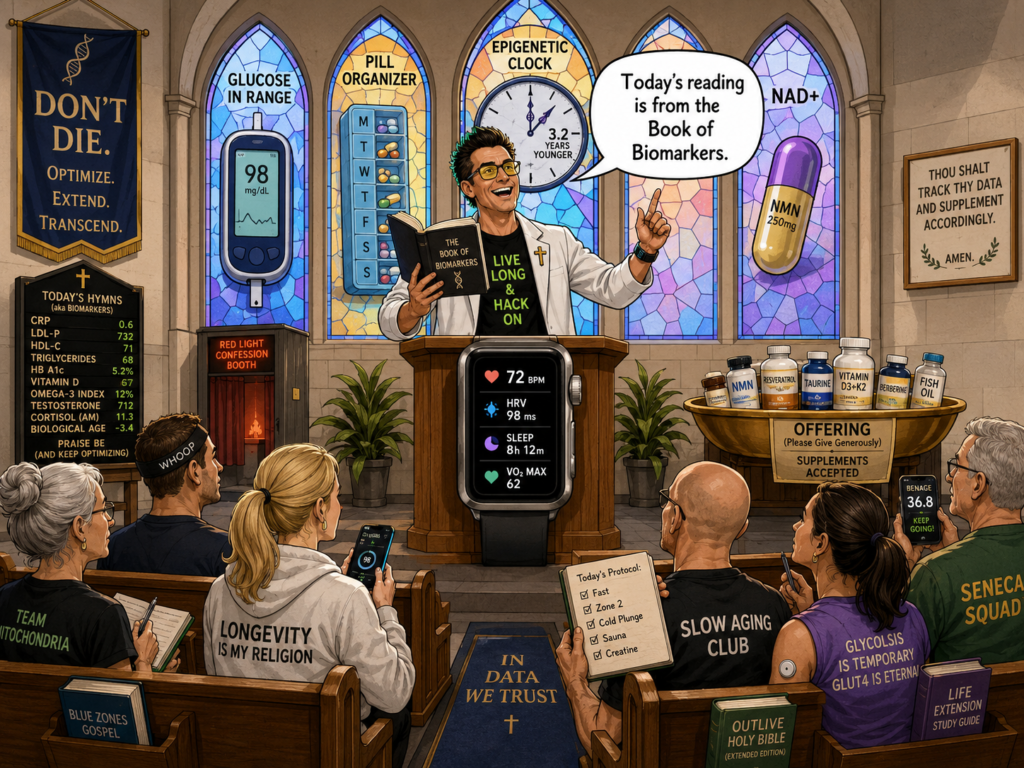
I will give Johnson credit his critics withhold. He publishes both his protocols and his failures. This is more transparency than that offered by most supplement vendors. However, the fact that he used himself as a test subject for five years based solely on animal data and reversed course when a human signal indicated otherwise is telling. There was no control group and no blinding in Johnson’s case. And it is now becoming a “Don’t Die” movement with its own app, merchandise, and a church. When a health regimen acquires a prophet, it loses scientific credibility
Bryan Johnson’s autoimmune diagnosis
Johnson announced in July 2026 that he was diagnosed with autoimmune gastritis, a disease where the immune system attacks the stomach’s lining. This prevents the body from obtaining enough iron and vitamin B-12, and increases the risk of stomach cancer. His team discovered this condition after years of low iron levels led to an endoscopy and biopsies. Despite being a disease with an unknown exact cause, the takeaway is hard to miss. Even the most measured man alive could not track his way out of a common disease, and no dashboard biohacks anyone out of illness and death.
A dent in his certainty
The autoimmune diagnosis also seems to have shaken Johnson’s confidence in the entire project. Following the diagnosis, he began questioning whether he had pushed his regimen too far. Even before the news, he had stepped back from running Blueprint, and hired a CEO. He has referred to the company as “a pain in my ass” and said he might sell it or shut it down. He has not, in fact, abandoned the project. But the man who claimed to have near-total control of his bodily functions now seems less sure.
Other billionaires betting their bodies
Bryan Johnson gets a lot of attention. However, he is not the only rich man testing longevity ideas on himself. Another one is Peter Thiel. Thiel has taken daily human growth hormone for longevity. The idea is that growth hormone levels decline with age, so topping it back up seems like it should restore youth. The biology says otherwise. Growth-hormone-deficient mice have been shown to far outlive normal ones. Moreover, the Mayo Clinic says HGH does not slow aging and can have adverse side effects. It is illegal to use for this purpose in the US. Thiel has called young-blood transfusions really interesting as a personal treatment, had his health director contact Ambrosia, a startup that sold infusions of plasma from donors under 25. He has also weighed metformin, without committing.
Sam Altman put 180 million dollars into Retro Biosciences, and he has said he takes metformin, eats carefully, and exercises. Both men fund the research and dose their own bodies at the same time, and metformin has no proven lifespan benefit in healthy people either.
Another billionaire, Larry Ellison, the Oracle founder, has given more than 350 million dollars to aging research and has kept a strict personal diet for decades. The 80-year-old has been praised by Johnson for “doing a good job managing biological aging.”
The gene-therapy self-experimenters
The “gene-therapy self-experimenters” go even further. In 2015, Liz Parrish, CEO of BioViva, avoided regulatory oversight by traveling to Colombia to become the first person to dose herself with gene therapies for aging. This included a telomerase gene and a follistatin gene. Although there were no controls or peer review, ten years later, she is selling the results of those experiments as a personal success story. Another gene therapy company, Minicircle, operates within the Próspera free economic zone in Honduras to avoid U.S. regulatory agencies and is selling a follistatin plasmid treatment that it calls a “clinical trial”.
The appeal is understandable. When your own clock is ticking, the speed of Phase II trials can seem glacial. I have experienced some of that myself. However, using an experimental gene therapy with no regulatory oversight provides no scientific value. The customer bears all the risk for a procedure that produces no useful information for others.
Why the first longevity treatment might come from dogs
Some of the best longevity science comes from dog research. This includes the STAY study, conducted by Loyal, Inc. It has enrolled over 1,300 senior dogs at approximately 70 clinics. This study may produce the first drug approved to extend healthspan (healthy lifespan). The FDA’s Center for Veterinary Medicine granted it “a reasonable expectation of effectiveness” in 2025 – an important regulatory milestone.
Dogs are good models for longevity because they age rapidly. This means studies get results in years rather than decades. Moreover, they live in our homes breathing our air. And dogs don’t know how to fake their biomarkers. A drug that extends dog life has the potential to tell us more than a billionaire’s regimen.

Robert Schwarz via Pexels
What the longevity science adds up to
The evidence tells us how to sort the field. Senolytics and rapamycin have had real human trials with mixed results. Reprogramming has enormous funding, but mid-2026 we are still waiting for efficacy data on the one patient who was dosed. Plasma dilution has an elegant mouse result and a small human study. The self-experimenters have stories, cameras, and a new religion.
Here’s the bottom line. Put your trust in studies that use control groups and publish their failures. Do not trust the work that sells access in countries with lax oversight. Longevity science occurs at the speed of aging. This can be frustratingly slow, but it is the only pace that will ever produce something proven to work.
I would love to write up a longevity treatment success story. If Altos rejuvenates a human organ, or TAME finally gets underway, I will report it. Until then, I remain hopeful and cautious at the same time. And I will trust scientific data over a sales pitch.
Your thoughts on longevity science
This piece is argumentative, so let’s get into it. Here are some questions on which I would love to get your perspectives:
If you had a short time to live, would you try an unproven life extending gene therapy in a foreign country with loose rules? Or would you spend several years waiting for a clinical trial that may ultimately prove too late for you?
Does self-experimentation have a place in longevity science? Bryan Johnson documents his failures, which is more than can be said for most supplement manufacturers. Does this give him a free pass, or does the “Don’t Die” church cancel it out?
Should regulators view aging as a condition you can treat per se, allowing studies like TAME to finally run?
And finally, if partial reprogramming is shown to be very effective, but carries a small but significant cancer risk, would you do it?
Leave a comment with your opinion.
Bleeding Edge Biology longevity science recommendations
Here is a short reading and watching list for longevity science. I tried to balance the boosters with the skeptics, because you learn more from the argument than from either side alone.
Longevity science reading
Books for the general reader
-
Why We Die: The New Science of Aging and the Quest for Immortality by Venki Ramakrishnan (2024). A Nobel laureate looks past the hype at the real biology of why we age. This is probably the most level-headed popular book in the field.
-
Ageless: The New Science of Getting Older Without Getting Old by Andrew Steele. A physicist turned biologist walks through the mechanisms of aging with clear writing and healthy caution.
-
Outlive: The Science and Art of Longevity by Peter Attia. Practical and evidence-minded on healthspan, though read the drug and supplement chapters skeptically.
Scientific reading
-
Hallmarks of Aging: An Expanding Universe by López-Otín and colleagues (Cell, 2023). The map almost every researcher in this piece works from, now expanded to twelve hallmarks.
-
The information theory of aging has not been tested (Cell, 2024). A sharp reply to Sinclair’s idea, and a good example of how the field self-checks big claims.
-
Influence of rapamycin on safety and healthspan metrics after one year: PEARL trial results. The actual human data on rapamycin, missed endpoint and all.
General-reader longevity science journalism
-
Billionaires Bankroll Cell Rejuvenation Tech as the Latest Gambit to Slow Aging (Scientific American). A clear tour of who is funding reprogramming and why.
-
This biohacking company is using a crypto city to test controversial gene therapies (MIT Technology Review). The Minicircle and Próspera story, reported firsthand.
-
Bryan Johnson wants to start a new religion in which “the body is God” (MIT Technology Review). Where the self-experiment story turns into a faith movement.
Longevity science talks and videos
-
Cynthia Kenyon: Experiments that hint of longer lives (TED). The single gene mutation that doubled a worm’s lifespan, from the scientist who found it.
-
Aubrey de Grey: A roadmap to end aging (TED). The bold engineering pitch that shaped a generation of longevity advocates, worth watching with a critical eye.
-
Healthspan Medicine with Matt Kaeberlein (YouTube). A working aging biologist takes apart supplement hype and grades the field, Sinclair included, without mercy.
-
Peter Attia MD (YouTube). Long, careful conversations on the science of living longer and healthier.
Longevity science documentary
-
Don’t Die: The Man Who Wants to Live Forever (Netflix, 2025). The Bryan Johnson documentary. Watch it as a character study, not a protocol.
Websites and newsletters in longevity science
-
Lifespan.io, now the Lifespan Research Institute after merging with SENS. Daily longevity news for a general audience.
-
Fight Aging!, a long-running newsletter with opinionated coverage of rejuvenation research.
-
Buck Institute for Research on Aging. This is the first research center built solely to study aging, and is the source of the 2025 plasma exchange study above.
-
Peter Attia MD, home of The Drive podcast and deep write-ups on healthspan.
Featured image: Lucas Cranach–The Fountain of Youth 1546
Sources: Mayo/SToMP-AD senolytic trial; UNITY UBX0101 failure; Altos Labs funding; Retro Biosciences and OpenAI; David Sinclair / Sirtris; Sinclair ICE mouse / Cell 2023; Life Biosciences ER-100 first patient dosed; PEARL rapamycin trial; TAME / Barzilai; Conboy plasma dilution; Bryan Johnson plasma swap and stopping rapamycin; Don’t Die religion; BioViva / Liz Parrish; Minicircle in Próspera; Loyal STAY study.